

Historic Architecture Meets Rock-and-Roll in This Lakewood Home
Some homes ask to be completely reimagined. Others tell you exactly what must be protected.
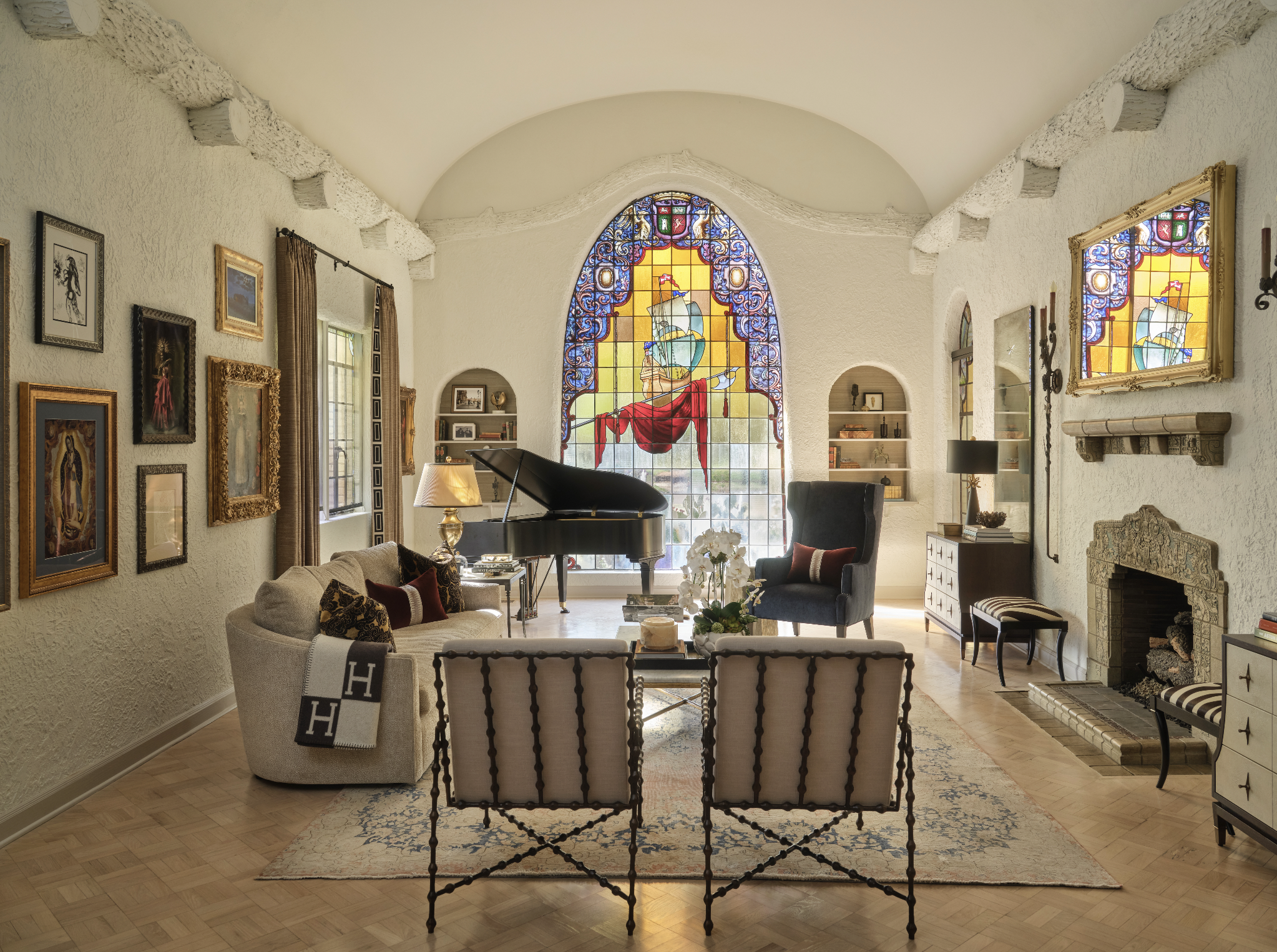
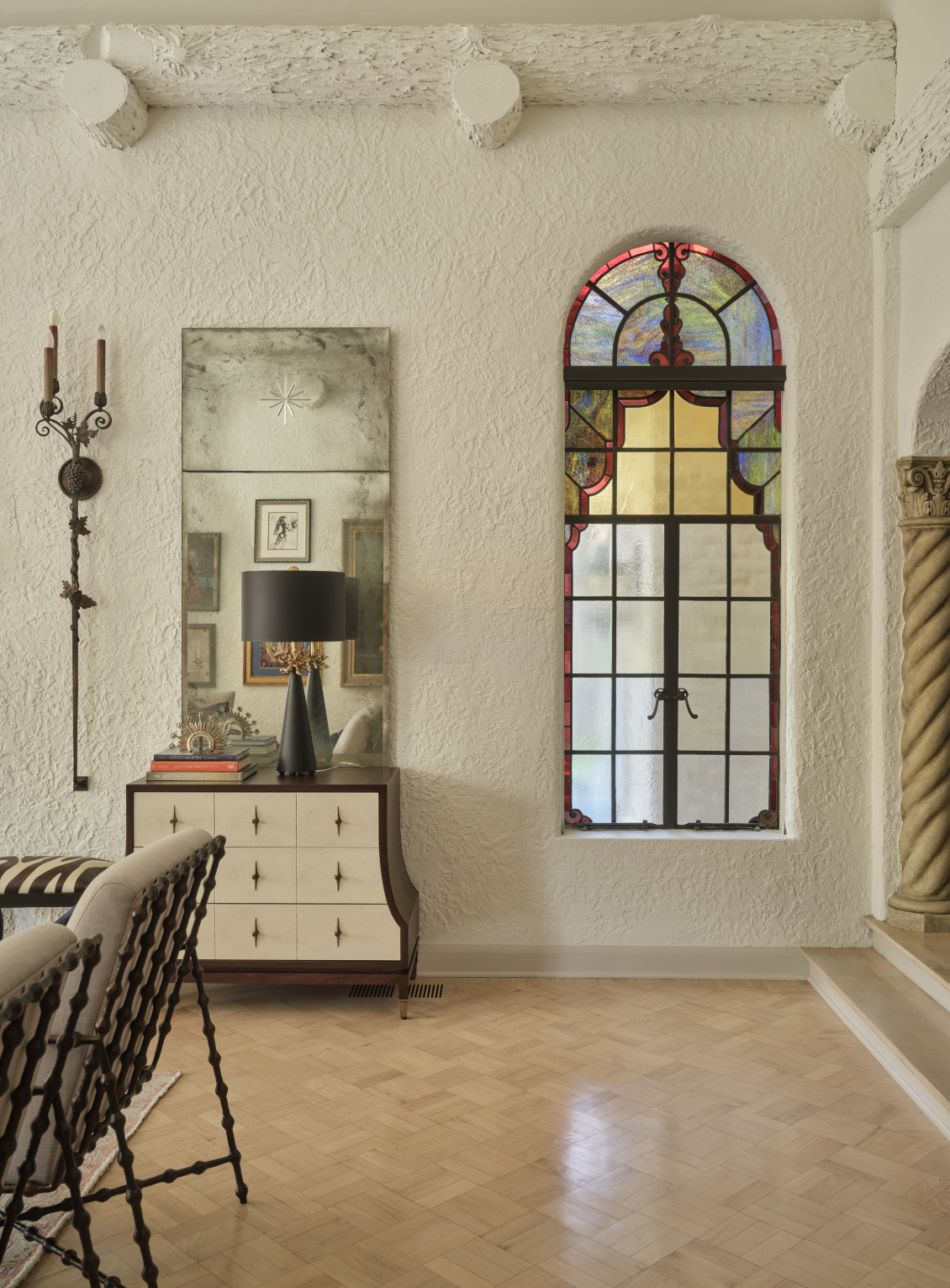
Built in 1928 by noted Dallas architect Clifford D. Hutsell, this Spanish Colonial home in the Lakewood neighborhood arrived with nearly a century of character already in place. Original stained-glass windows, hand-troweled plaster walls, decorative ironwork, and a soaring barrel-vaulted living room gave the home an unmistakable sense of drama.
Our clients wanted to honor that history without creating an interior that felt frozen in time. Their vision was more personal, layered, and unexpected: a historic Dallas home with a decidedly rock-and-roll spirit.
The result, recently featured in D Home, is a study in contrasts. Light and shadow. Historic and modern. Refined and rebellious.
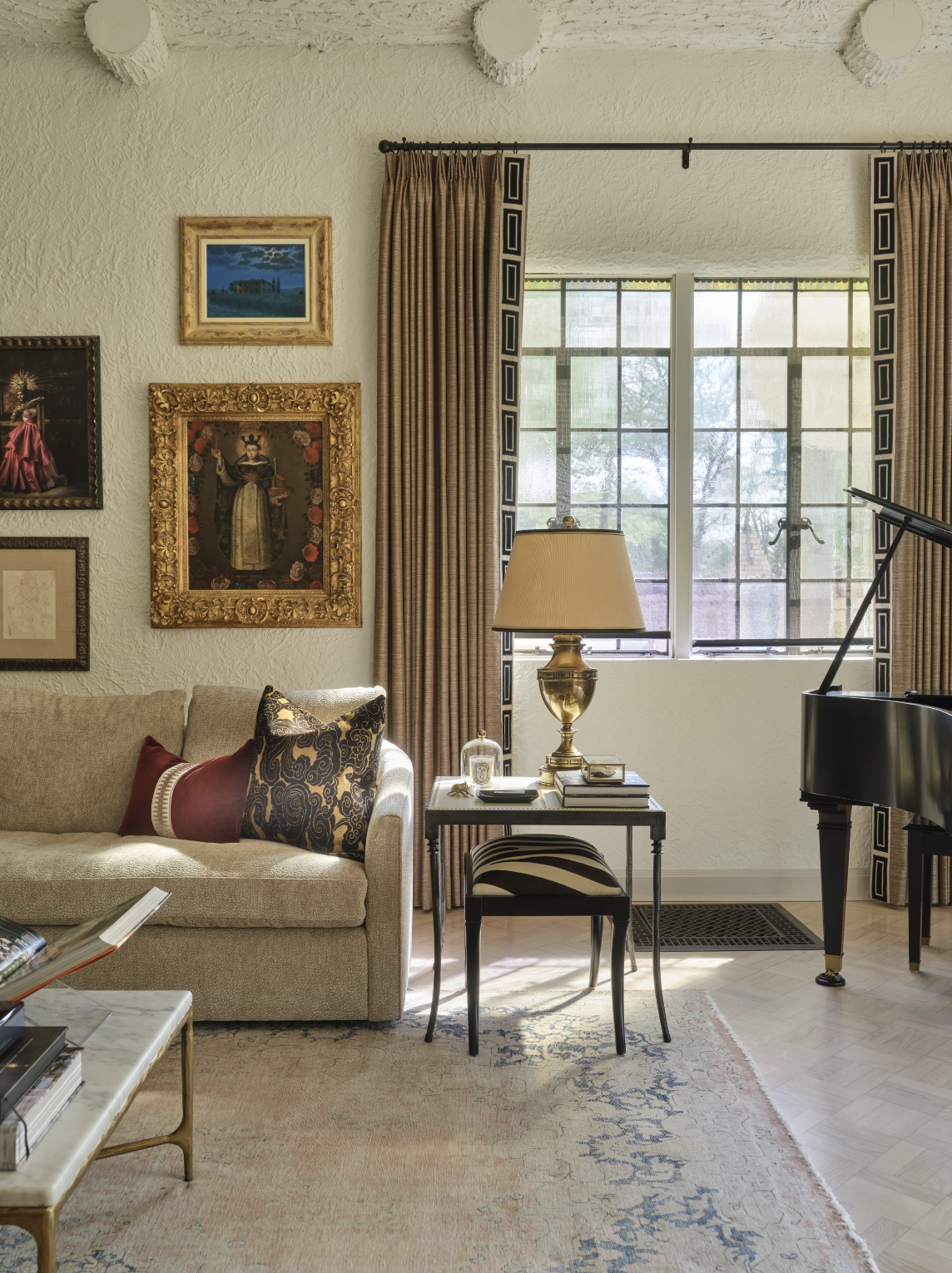
Honoring the Architecture of a Historic Dallas Home
Renovating a historic home requires restraint as much as creativity. The goal was never to compete with Hutsell’s architecture or erase what made the house extraordinary. Instead, we looked for ways to preserve its defining features while making the spaces function beautifully for the way our clients live today.
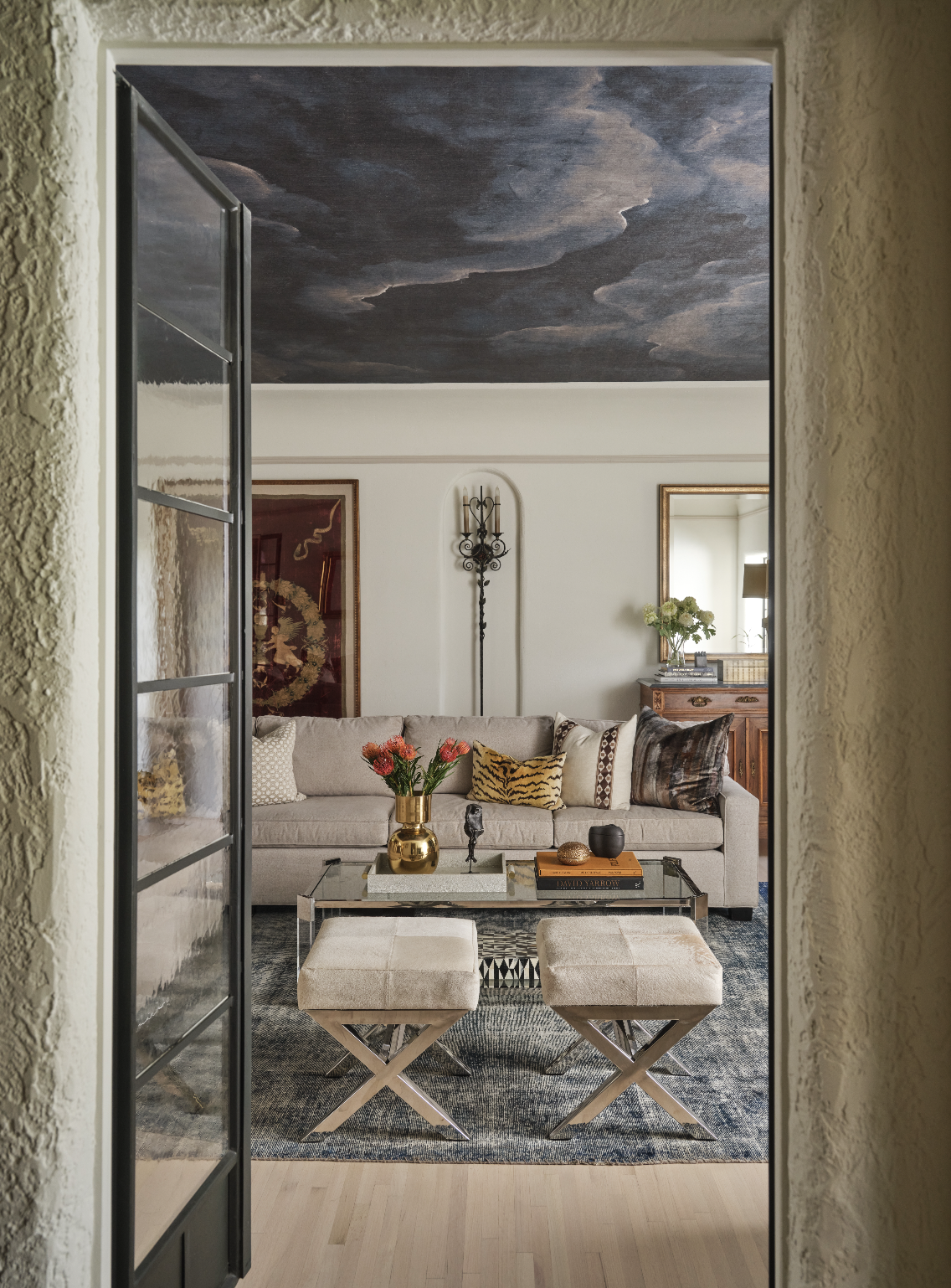
In the living room, the original stained glass and barrel-vaulted ceiling remain the stars. Furnishings and collected pieces were selected to complement that architectural presence rather than overpower it. Antique mirrors, Old World portraiture, sculptural forms, and a grand piano give the room depth while reflecting the homeowners’ artistic sensibility.
The space feels storied, but not overly formal. That balance was essential.
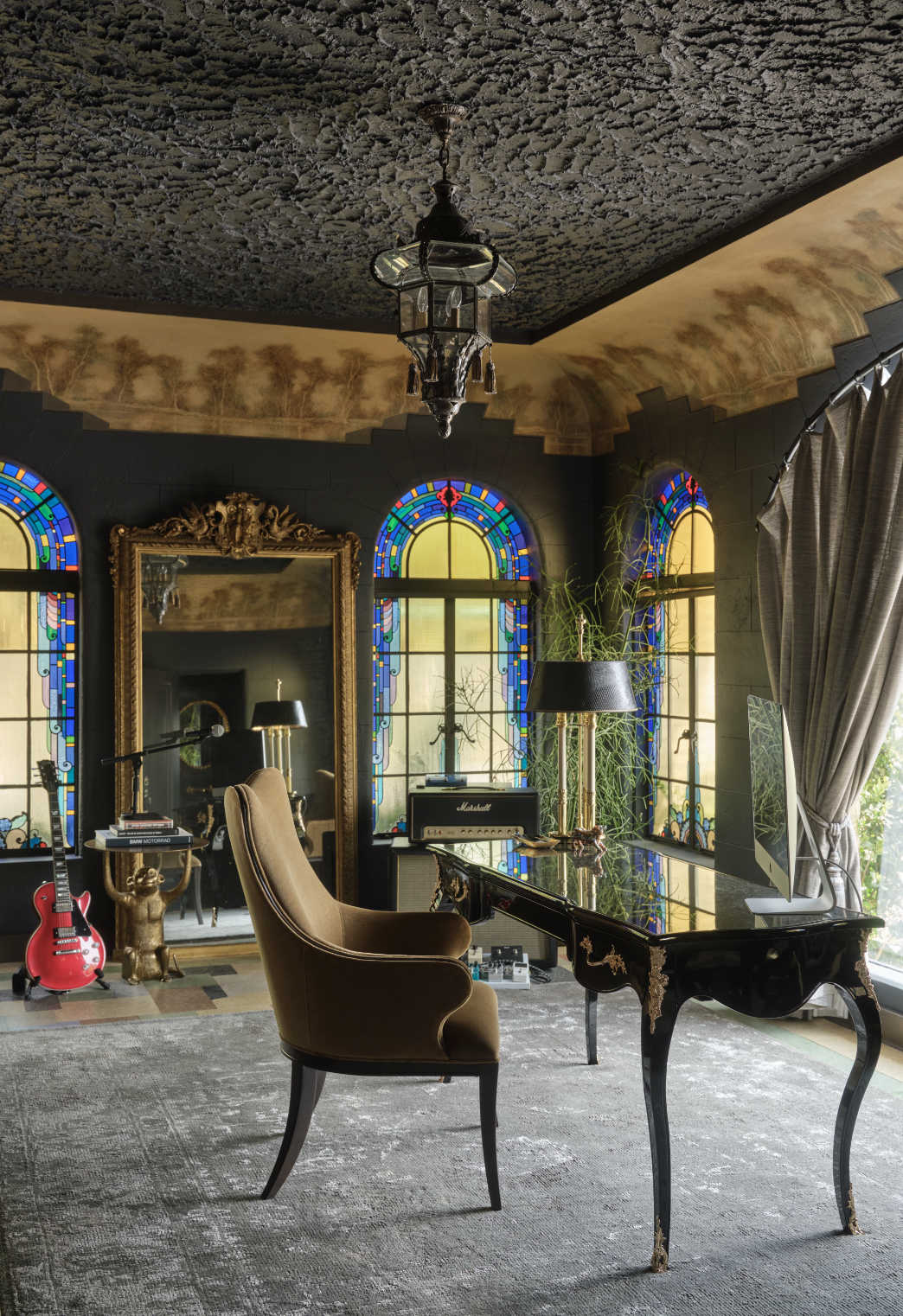
Creating Contrast Through Color and Mood
Throughout the home, we used contrast to create a sense of discovery.
The sun-washed primary living spaces feel open and luminous, allowing the plaster walls and stained glass to come forward. In other rooms, we embraced a much darker palette.
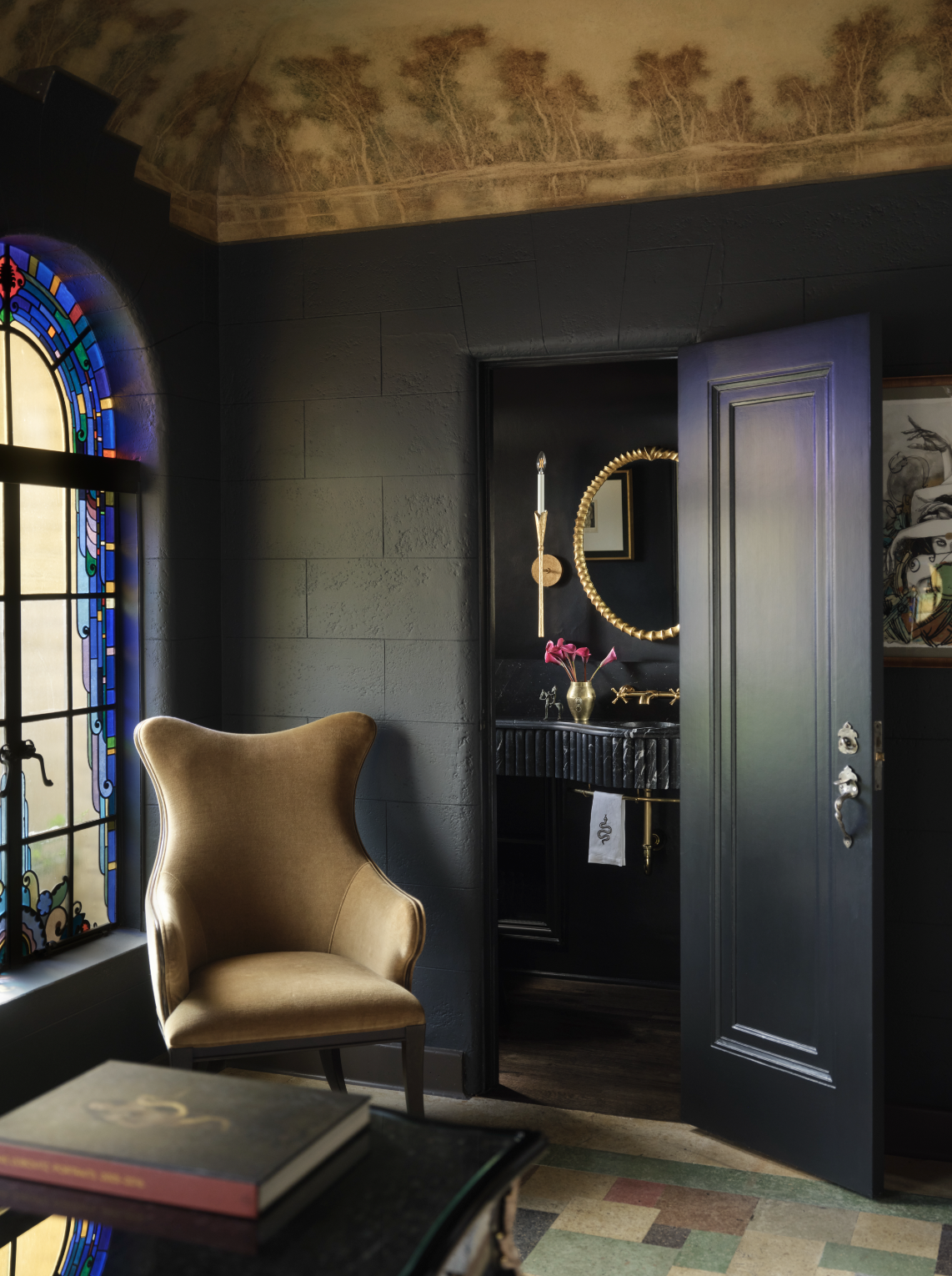
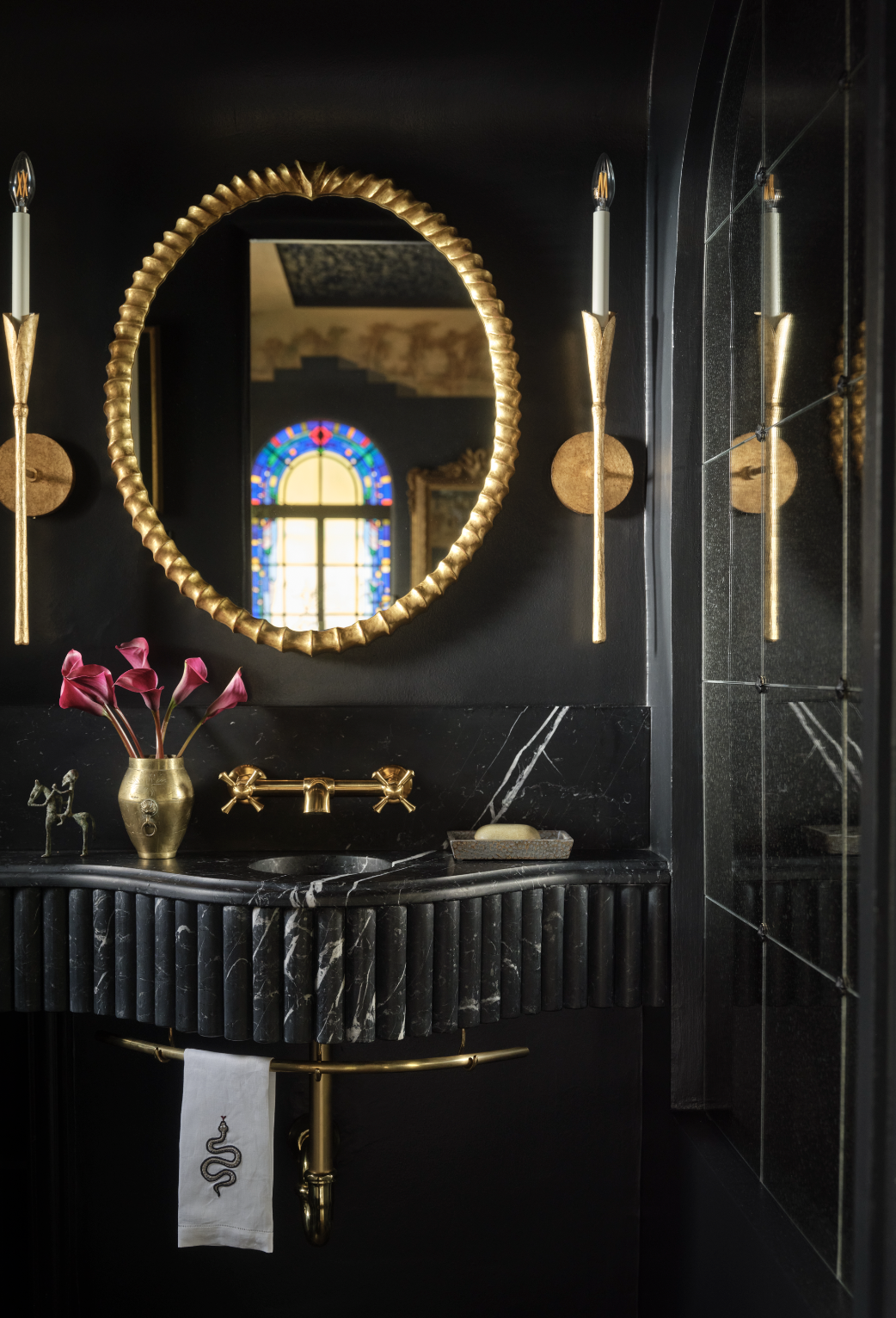
The home office and powder bath lean fully into the project’s gothic influences with inky black paint, gilded sconces, and hand-painted ceiling murals. These immersive spaces feel dramatic and transportive, yet still connected to the architecture of the house.
This is one of our favorite ways to approach bold design. Not every room needs to make the same statement. Allowing spaces to shift in mood makes the experience of a home far more interesting.
Bringing Drama Into the Everyday Spaces
Historic character and practical living do not have to exist separately.
In the kitchen, a jewel-toned velvet banquette and brass pendant lighting introduce color and glamour into one of the home’s most functional spaces. The choices are bold, but they also make the room feel warmer, more comfortable, and more inviting.
The primary bathroom takes a quieter approach. Warm walnut cabinetry, a softly patterned marble floor, and a sculptural, surfboard-inspired mirror create a sense of understated luxury. It feels modern without becoming disconnected from the rest of the home.
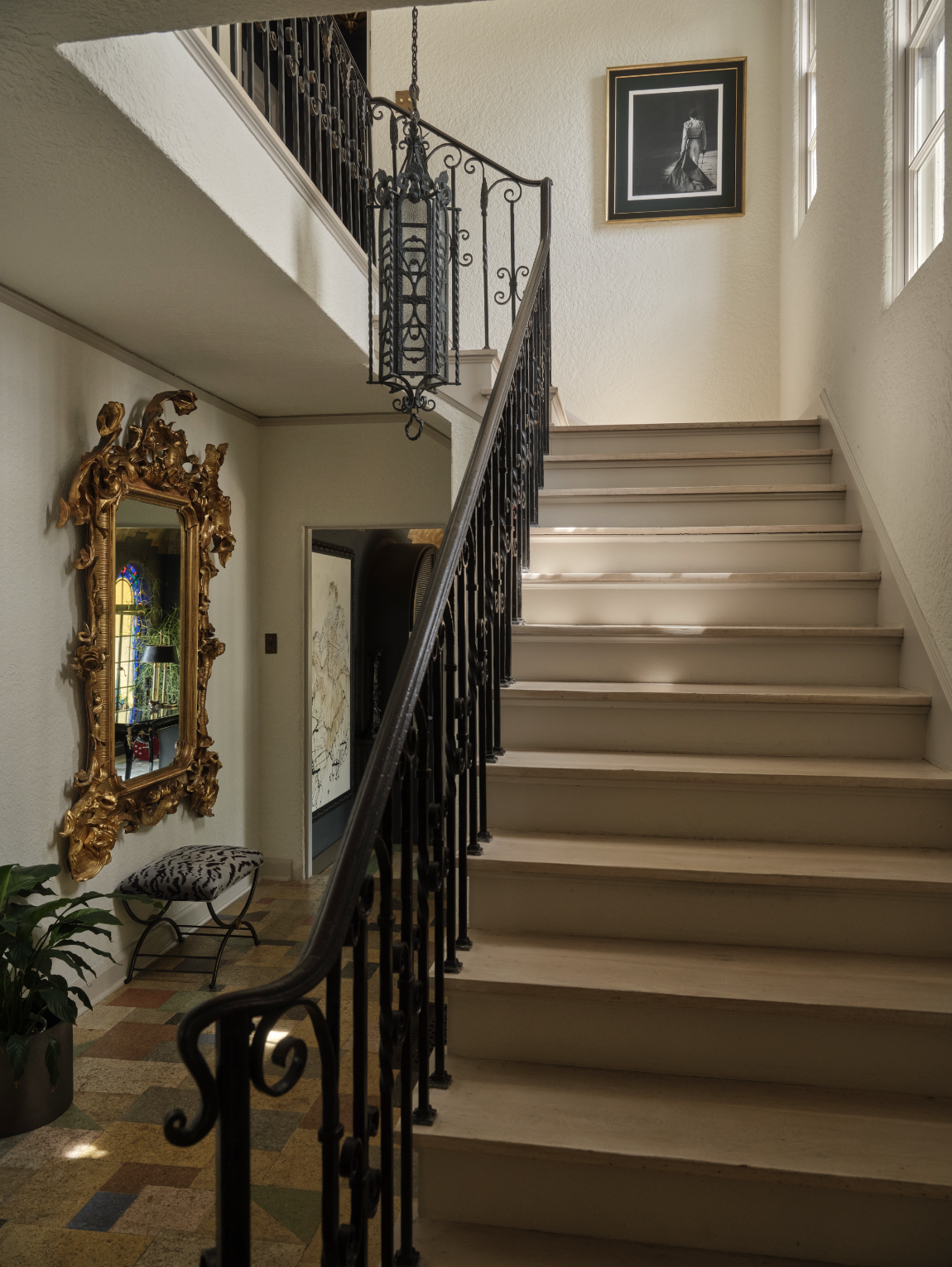
Even the entry offers a preview of what is to come. Original ironwork paired with a gilded antique mirror acknowledges the home’s 1928 roots before the more unexpected moments begin to unfold.
A Home That Feels Collected, Not Decorated
The most compelling interiors rarely feel as though everything arrived at once.
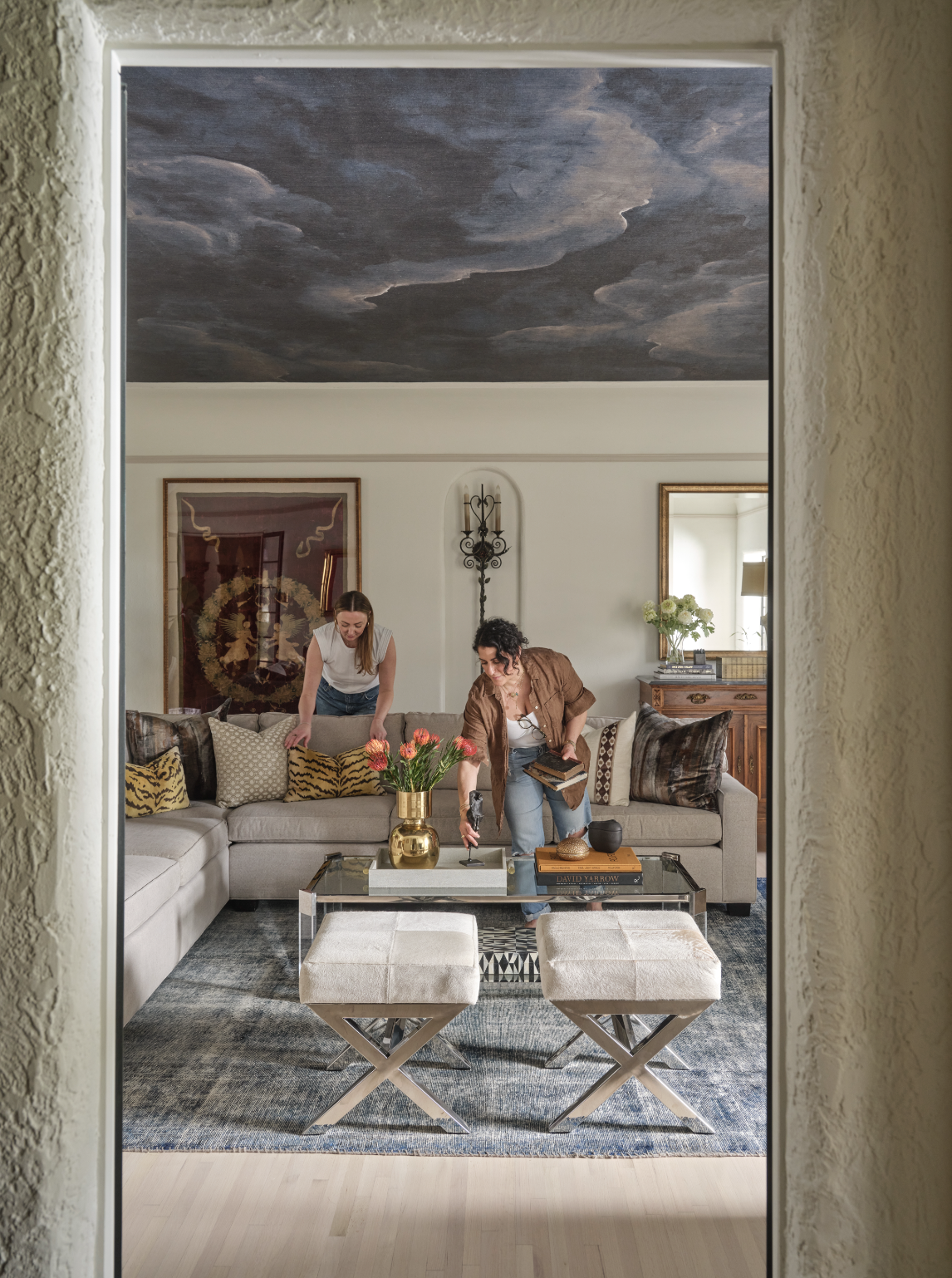
This home was designed to feel collected over time, combining original architecture, antiques, art, custom furnishings, and contemporary elements. Each piece contributes something to the story, but the rooms never feel themed or overly coordinated.
That sense of individuality is central to our work at Pulp Design Studios. We do not believe historic homes must be treated as museums, just as we do not believe luxury should feel predictable. The most successful designs respect the setting while revealing something meaningful about the people who live there.
Lakewood Gothic Grandeur proves that preserving a home’s architectural integrity and expressing bold personal style are not mutually exclusive. In fact, the tension between the two is exactly what makes the home unforgettable.
Explore the complete Lakewood Gothic Grandeur portfolio →
Frequently Asked Questions
Who designed this historic Lakewood home?
The Spanish Colonial home was originally designed in 1928 by noted Dallas architect Clifford D. Hutsell. Pulp Design Studios completed the interior renovation and furnishings, preserving the home’s defining architectural details while adapting it for contemporary living.
What original architectural features were preserved?
The home retains its original stained-glass windows, decorative ironwork, hand-troweled plaster walls, and dramatic barrel-vaulted living room.
How can a historic home feel modern without losing its character?
The key is to identify and preserve the architecture that gives the home its identity, then introduce contemporary function and personality through lighting, color, furnishings, art, and carefully considered renovations.
Where is the home located?
The project is located in Lakewood, a historic East Dallas neighborhood known for its distinctive architecture and collection of Clifford D. Hutsell-designed homes.
Photographed by Cody Ulrich.
Credits



SECTIONS
Design InsiderEntertaining + Home Living
Health + Beauty
News + Announcements
Pulp At Home
Pulp Design Work
Shopping Guide
The Business of Design
The Pulp Edit
Travel
Videos
GET INSPIRED
SUBSCRIBE TO OUR NEWSLETTER TO
GET AN INSIDER LOOK IN YOUR INBOX