All posts by Beth and Carolina

Inside Devonshire Modern Retreat: A Dallas Second Home with Room to Unwind

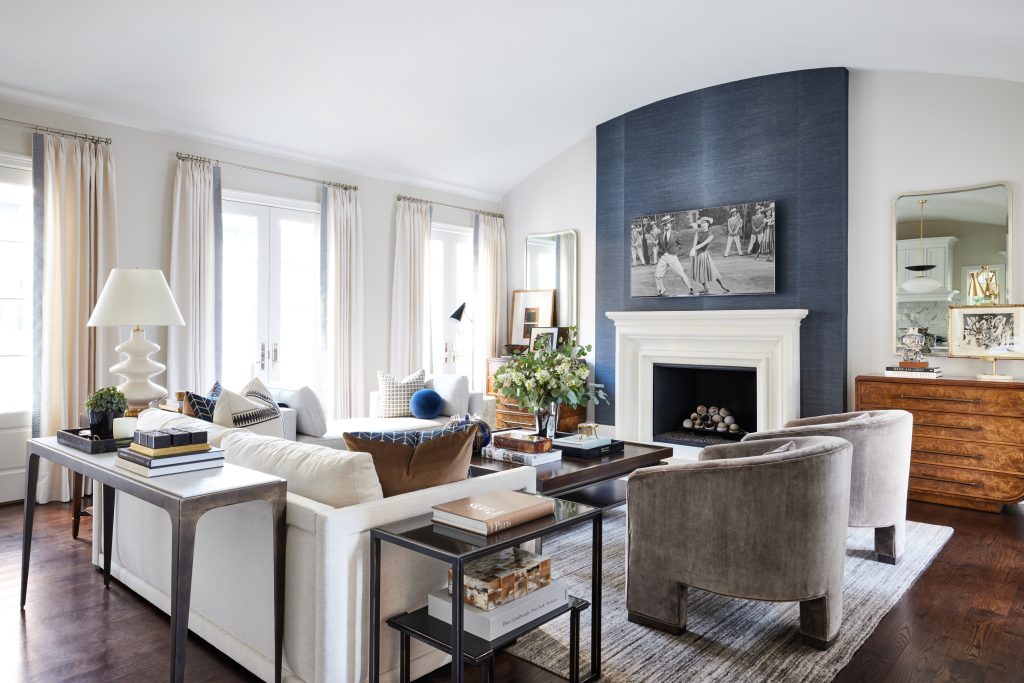
A second home should feel different the moment you walk in. For our clients, the goal was a Dallas retreat that felt warm, modern, and easy to live in… a place to gather, recharge, and make themselves at home.

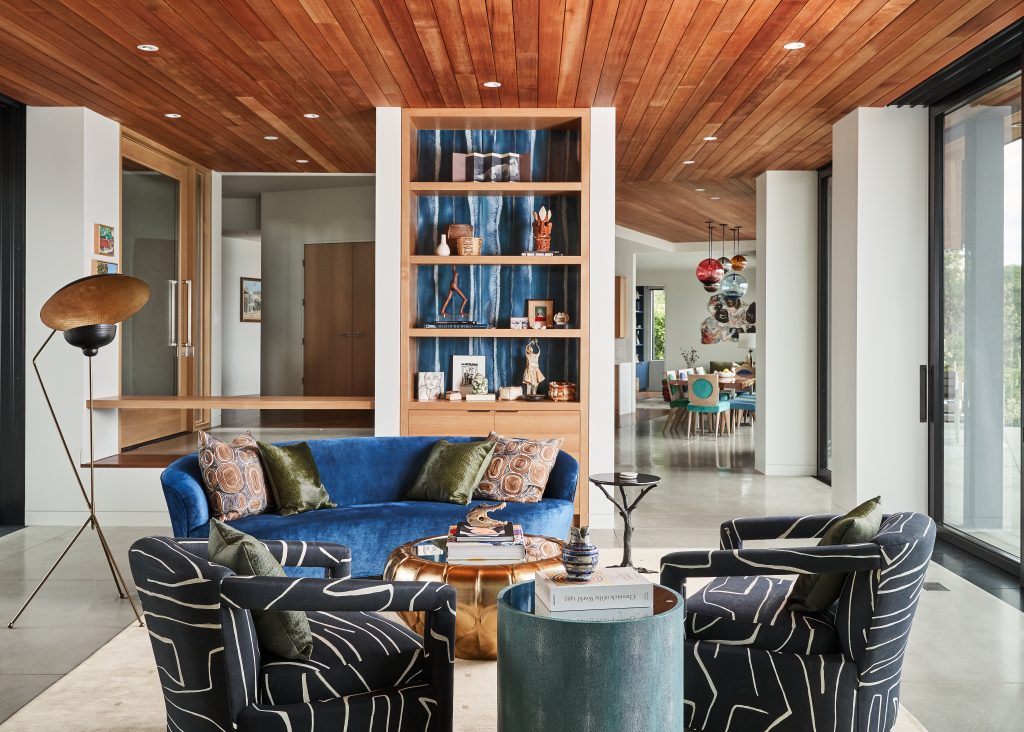
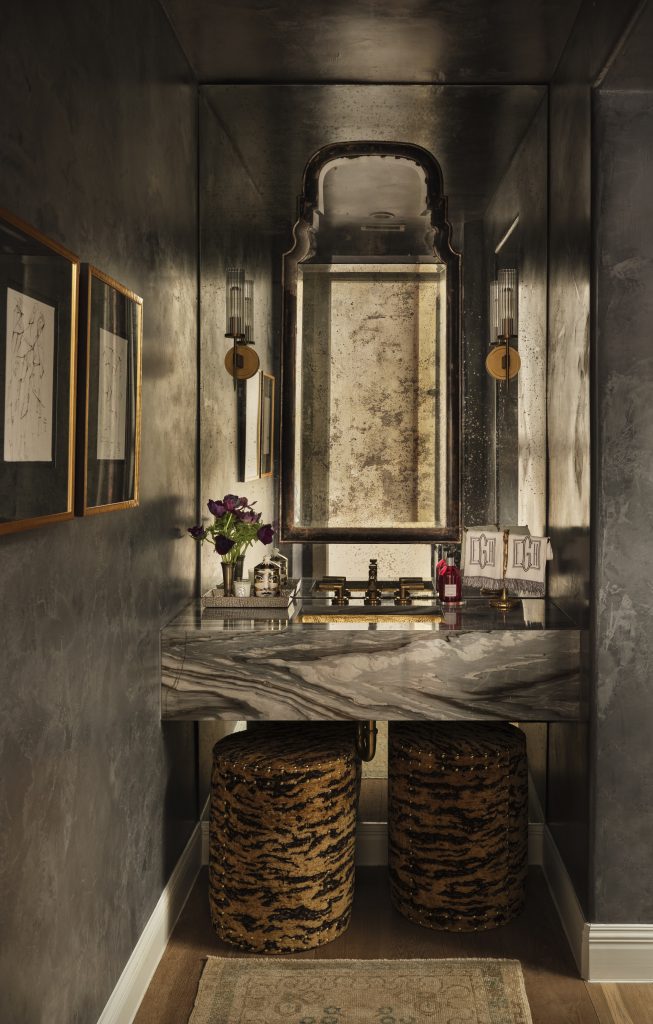
We renovated and furnished Devonshire Modern Retreat with that feeling in mind. Rich wood, natural stone, custom millwork, and tailored furnishings give the home depth without losing its sense of calm. Each room has its own personality, but the materials and subtle contrasts carry a consistent thread throughout.

A Kitchen Made for Gathering

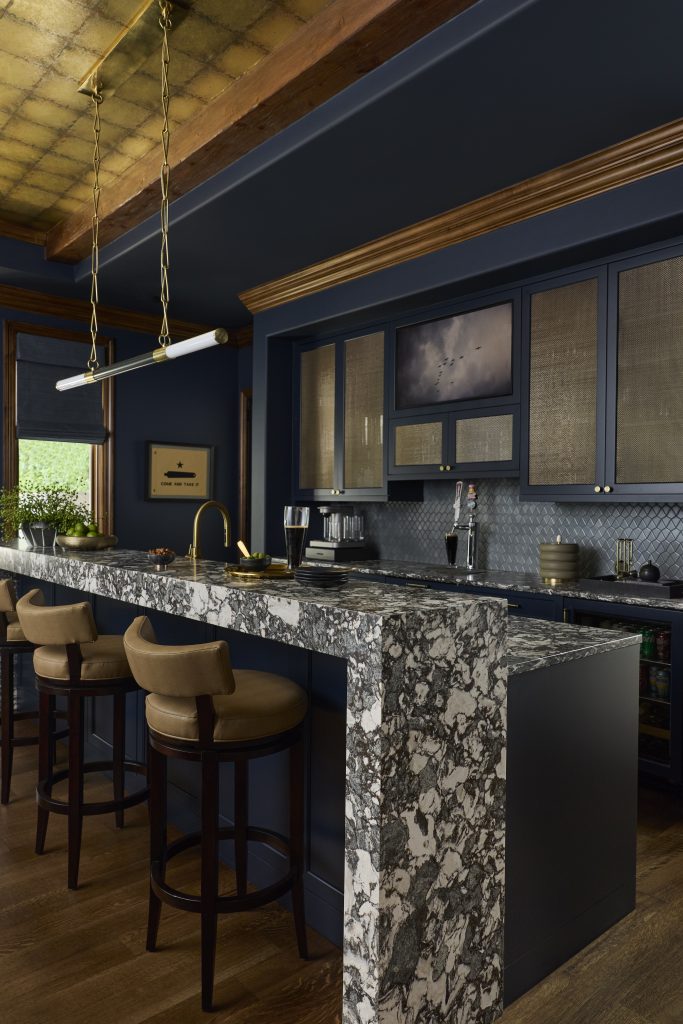
The kitchen’s transformation set the tone for the house. We moved away from its more classic, slightly glitzy look toward something warmer and more relaxed: California cool with a Dallas point of view. Leathered Taj Mahal stone brings softness and texture, while the clean lines and layered finishes let the natural materials shine. It’s a space that feels beautiful in photographs and even better with people in it.

A Different Mood Around Every Corner

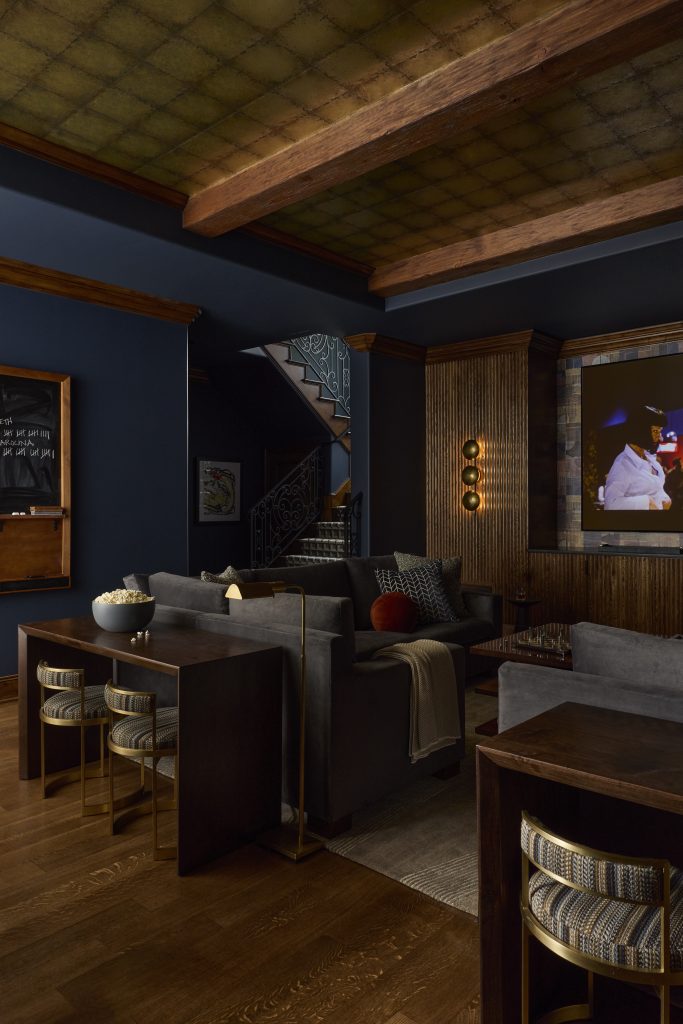
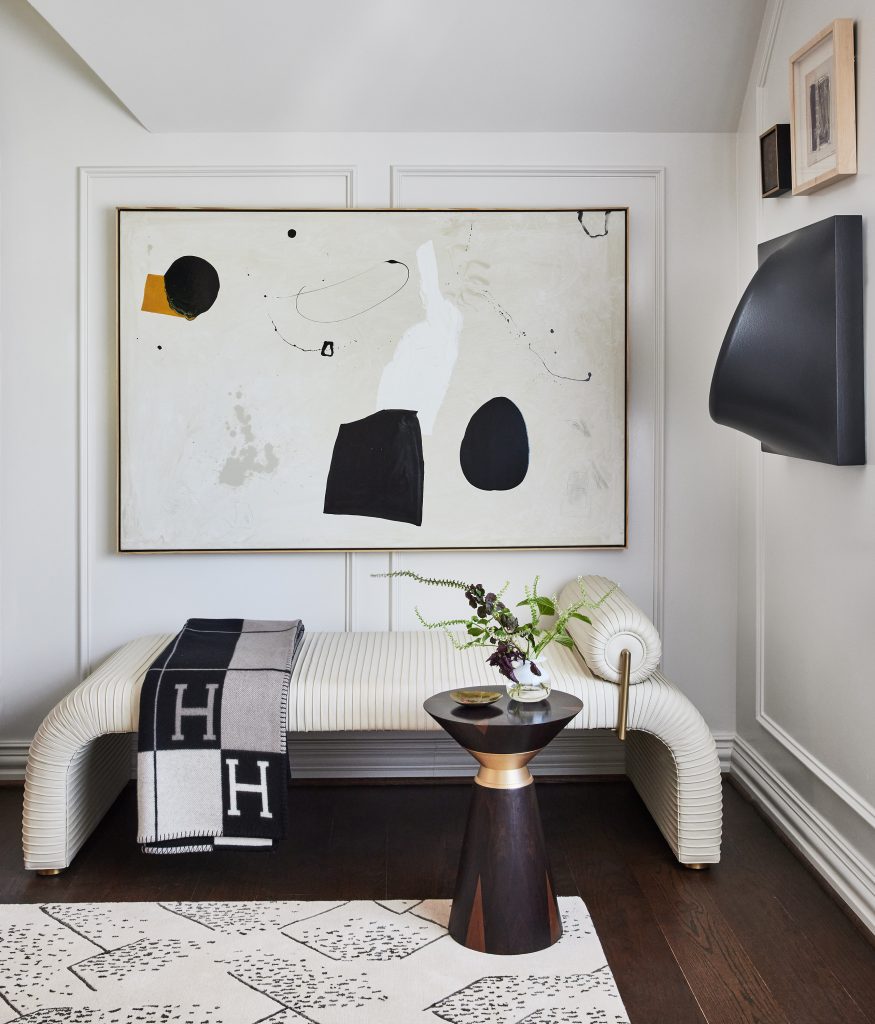
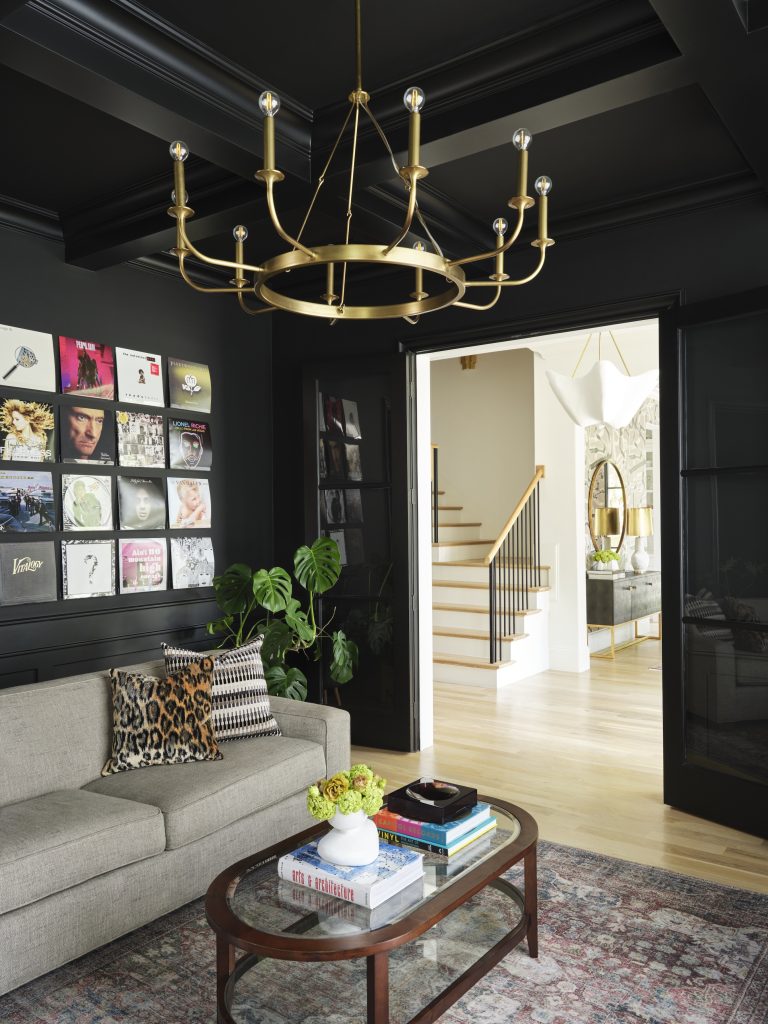
We wanted this home to offer more than one way to unwind. The light-filled gathering spaces feel open and inviting, while the moody media room is made for closing the door and staying awhile. Sculptural forms and layered lighting bring character to both.

Some of our favorite moments are the most personal. Our client loves pink but didn’t want it throughout the house, so we gave her a dressing nook of her own. Wrapped in layered pink tones, it turns a corner of the primary closet into something playful and polished.

We also designed a second primary suite with guests in mind. Its built-in coffee station, warm wood textures, custom millwork, and spa-like bath make it feel like a retreat within the retreat.

A Home That Feels Like an Escape

The finished home is grounded and refined, with enough contrast and personality to make it unmistakably our clients’. We’re thrilled to share it with you—and honored that Devonshire Modern Retreat is featured in Modern Luxury Interiors.

Explore the full Devonshire Modern Retreat project and see the Modern Luxury Interiors feature.

It’s Here: Fearless Design Is Out Today

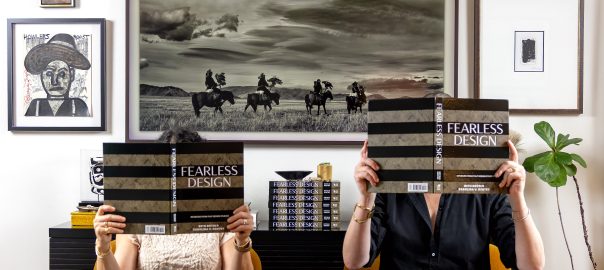
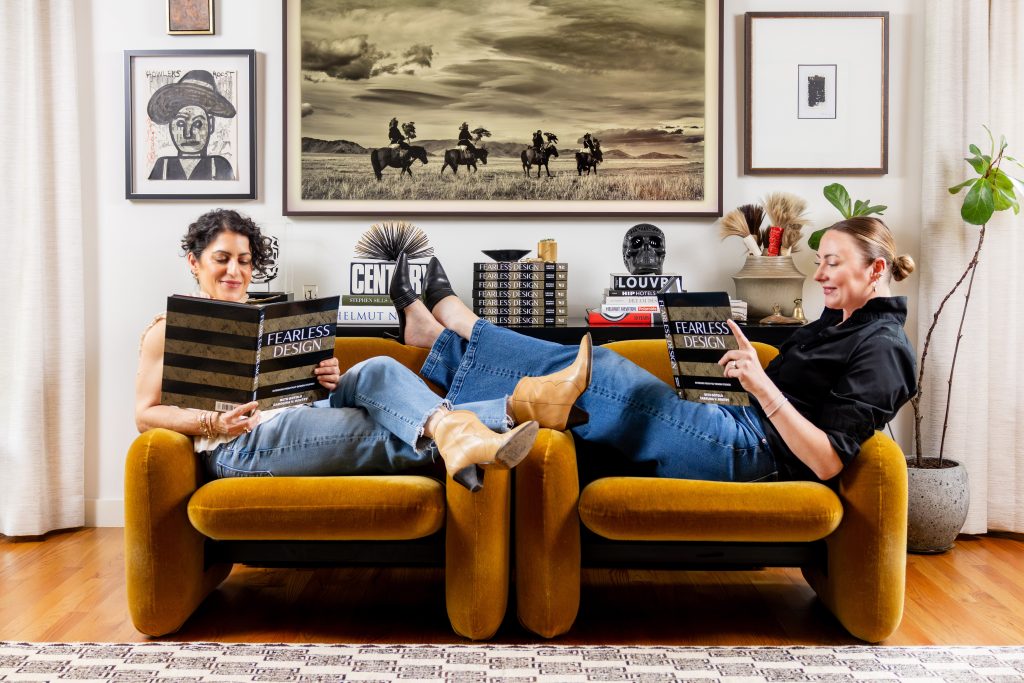
Today, Fearless Design: Interiors from Pulp Design Studios is officially out in the world.

When we started Pulp, we believed a home should feel unmistakably like the people who live in it. Nearly two decades later, that belief has taken us into so many extraordinary homes… and now, into the pages of our first book.

This book holds projects we’ve loved for years alongside homes and images we’ve never shared before. But it also holds the stories behind them: the clients who trusted us to take a chance, the teams who brought every detail to life, and all the decisions that made each space its own. Thom Filicia wrote the foreword, which makes this milestone even sweeter for us.

To our clients, collaborators, families, friends, and the entire Pulp team: thank you. A book may have two names on the cover, but this one took a whole lot of talented, generous people to make.

We hope Fearless Design gives you permission to make the daring choice, keep the thing you love, and create a home that could only be yours.

Fearless Design book launch 2026

Get your copy

Want one signed by us? Order the signed edition from the Pulp shop. Signed copies are scheduled to ship in October.

You can also order from Amazon, Barnes & Noble, Books-A-Million, Bookshop.org, Walmart, Target, or your local bookstore!

Come say hello

We’ll be celebrating with panels and book signings in High Point, Seattle, and Dallas in the coming weeks. We would love to see you there. Find the latest book tour dates and details here.

With love and a little bit of disbelief that this day is finally here,

The Fearless Design Book Tour

We’re taking Fearless Design on the road! Join us in cities across the country for lively conversations, special events, and book signings celebrating nearly two decades of fearless interiors. We’d love to see you along the way.

SEPT. 17, 2026 – NEW YORK, NY

WNWN – WHAT’S NEW WHAT’S NEXT

MORE THAN A MONOGRAPH:
What a First Book Reveals About a Creative Practice and Design Philosophy

Beth Dotolo, Carolina Gentry, Joan Craig, and Richard Beard
Moderated by Tony Freund of 1stDibs

Crosby Street Studios
200 Lexington Ave, Suite 802, New York, NY 10016
4:45 – 5:45 p.m. EST

SEPT. 18, 2026 – NEW YORK, NY

KIPS BAY NEW YORK DESIGNER SHOW HOUSE BOOK SIGNING

Kips Bay New York Designer Show House
80 West Washington Place, New York, NY 10011
11 a.m. – 1 p.m. EST

OCT. 17, 2026 – HIGH POINT, NC

HIGH POINT MARKET

FEARLESS DESIGN PANEL & BOOK SIGNING

Beth Dotolo & Carolina Gentry
Moderated by Thom Filicia

Feizy Showroom
309 N. Hamilton St., High Point, NC 27260
2:30 – 4:30 p.m. EST

OCT. 18, 2026 – HIGH POINT, NC

HIGH POINT MARKET

PULP X S. HARRIS III COLLECTION PREVIEW BREAKFAST & BOOK SIGNING

S. Harris | Fabricut Showroom
Market Square, Suite 217, Floor 2
305 W. High Ave, High Point, NC 27260
8:30 – 10 a.m. EST

OCT. 18, 2026 – HIGH POINT, NC

HIGH POINT MARKET

THE RIGOR AND REBELLION BEHIND A GREAT DESIGN BUSINESS

Beth Dotolo, Carolina Gentry, & Benjamin Johnston
Moderated by Sophie Donelson

Monogram @ 313 Space
313 S Centennial St., High Point, NC 27260
3 – 4 p.m. EST

OCT. 28, 2026 – SEATTLE, WA

FEARLESS BY DESIGN:
A CONVERSATION WITH PULP DESIGN STUDIOS

Beth Dotolo & Carolina Gentry
Moderated by CB2’s Gloria Kennett
Presented by CB2

CB2 University Village
2660 NE 49th St., Seattle, WA 98105
6 – 7:30 p.m. PST

OCT. 29, 2026 – SEATTLE, WA

PULP X S. HARRIS III COLLECTION PREVIEW & BOOK SIGNING

Dixon by Roslyn at Seattle Design Center
5701 6th Avenue South, Suite 132, Seattle, WA 98108
4 – 7 p.m. PST

NOV. 9, 2026 – DALLAS, TX

TEXAS DESIGN WEEK

THE IMPORTANCE OF THE DECORATIVE ARTS AND CRAFT IN INTERIOR DESIGN

Beth Dotolo, Carolina Gentry, Russell Pinch of PINCH London,
Sara Story, and Gramercy Design
Presented by PaperCity

Made Goods Showroom
1518 Slocum Street, Dallas, TX 75207
1 – 3 p.m. CT

NOV. 10, 2026 – DALLAS, TX

FEARLESS BY DESIGN:
A CONVERSATION WITH PULP DESIGN STUDIOS

Beth Dotolo & Carolina Gentry
Moderated by CB2’s Gloria Kennett
Presented by CB2

CB2
4510 McKinney Ave, Dallas, TX 75205
6 – 7:30 p.m. CT

JAN. 13-16, 2027 – PARIS

PARIS DÉCO OFF 2027

EVENT DETAILS TO COME

APR. 21, 2027 – DALLAS, TX

DALLAS DESIGN DAYS

Dallas Market Center
2100 Stemmons Freeway Dallas, TX 75207

EVENT DETAILS TO COME

More dates to come

Explore the Fearless Book Tour


Statement Ceilings: Why the Fifth Wall Is Luxury Design’s Best-Kept Secret

Most people design a room from the floor up. We design it from the ceiling down.

A statement ceiling is the fastest way to turn a good room into an unforgettable one, and it is one of the most underused tools in luxury interior design. Walls get the wallpaper budget. Floors get the rug budget. The ceiling, the largest uninterrupted surface in most rooms, gets a coat of builder-grade white and is never mentioned again. We think that is a missed opportunity, and it is one of the ideas we come back to on almost every project, from a Dallas dining room to a Seattle media room.

What’s the first thing you look at when a room’s ceiling feels low? We look at what is visually pushing down on the room. If you can’t hide it, make it stunning.

That is the whole philosophy in one line. A ceiling is not a problem to disguise. It is a fifth wall, and it deserves the same intention as the other four.

Four Ways We Use the Ceiling as the Fifth Wall

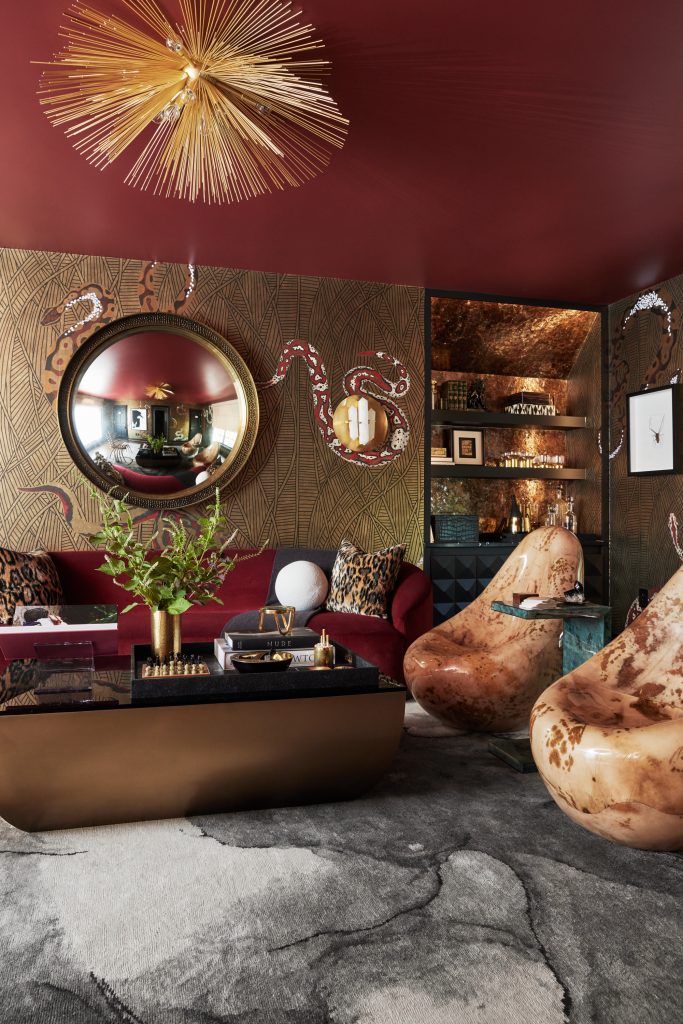
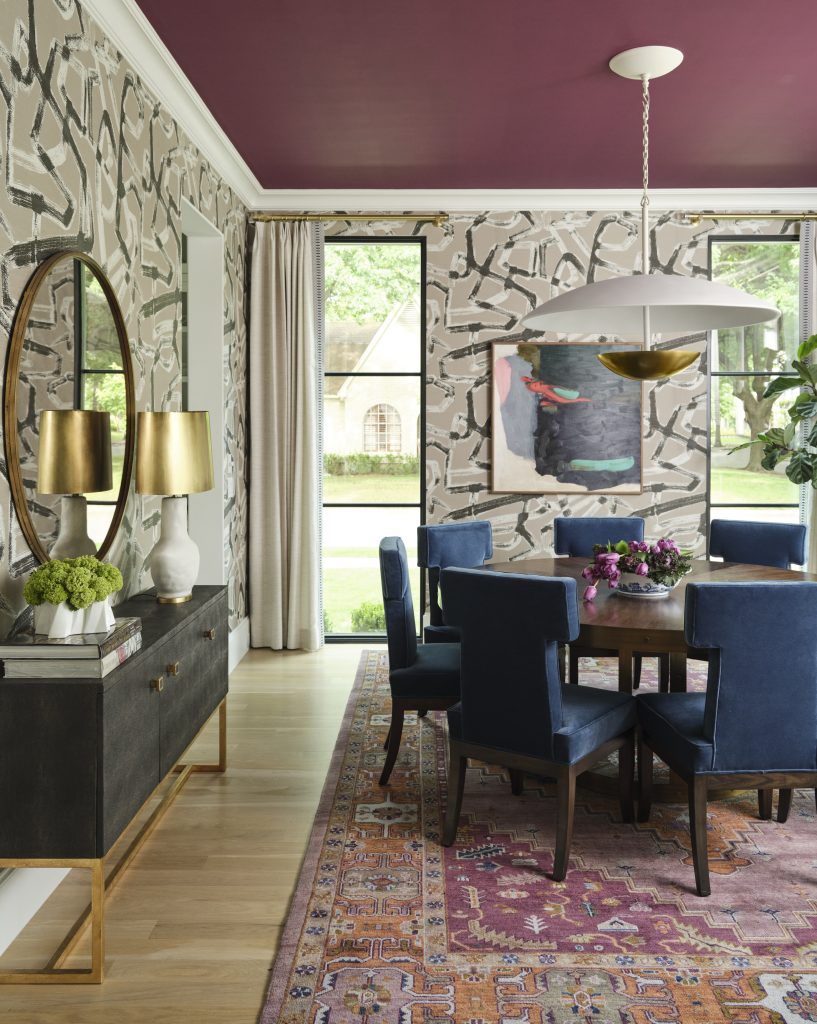
1. Color, unapologetically. Paint is the lowest-risk, highest-impact way to start. A deep raspberry, a rich burgundy, a saturated black. We have used Sherwin-Williams “Tricorn Black” on more ceilings than we can count, because dark color overhead creates intimacy and pulls a room together rather than making it feel smaller. In one Dallas dining room, we paired a bold raspberry ceiling with a wall pattern pulled from our own S. Harris fabric line, so the color story wraps the whole room instead of stopping at eye level.

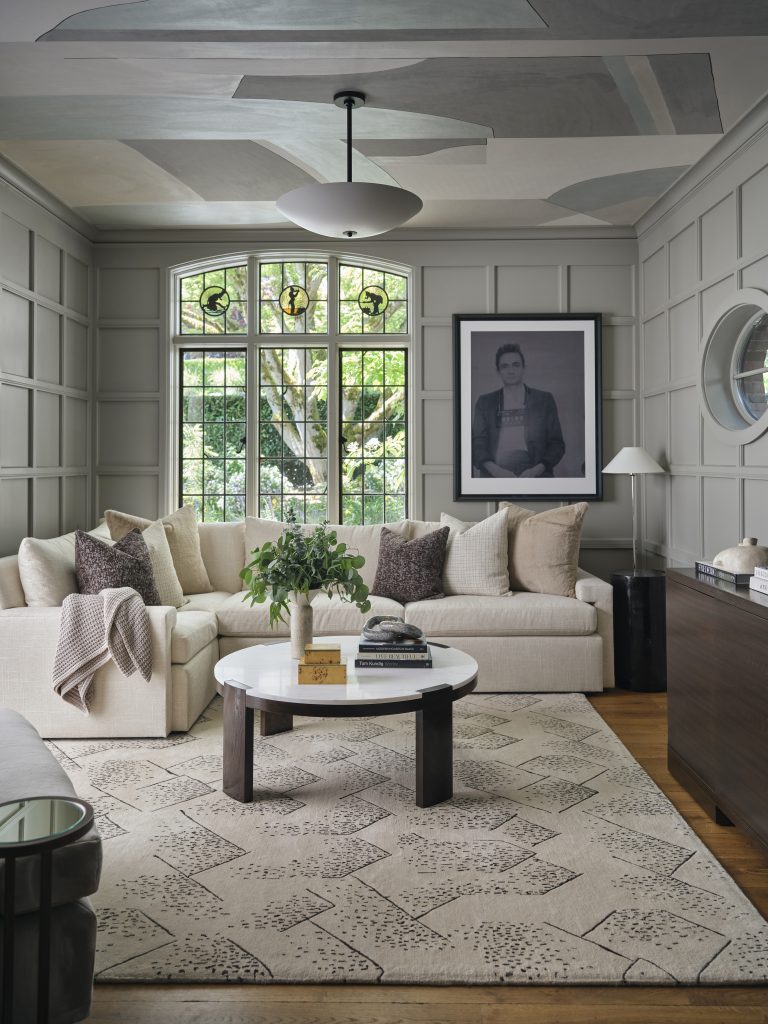
2. Wallpaper and hand-painted coverings. If a wall pattern is beautiful, ask why it should stop at the crown molding. We have customized hand-painted wallcoverings so a pattern curves seamlessly from wall to ceiling, and we have commissioned muralists to bring an entirely custom scene overhead, Matisse-inspired figures dancing across a den ceiling, gold paint that looks like it is dripping from a powder room ceiling. The ceiling becomes the art, not just the backdrop for it.

3. Architectural drama. Sometimes the move is not color or pattern but shape. Angled ceilings, coffered detail, sculptural trim. We treat an awkward roofline or a low attic slope as an opportunity rather than a flaw, framing it with pattern above and letting the architecture do the talking.

4. Texture and shine. Grasscloth, mica, hand-applied mineral finishes, a lacquered sheen that catches the light differently at every hour. A ceiling with texture reads as intentional in a way a flat coat of paint never will, and it is one of the quiet signals of a truly custom, high-investment interior.

Why It Matters for the Whole Room

A cookie-cutter home will never be considered iconic. The rooms that stop people in their tracks always have a fifth surface doing real work. It is the difference between a beautifully furnished room and a fully realized one. We have learned that clients remember the ceiling long after they have forgotten the sofa fabric, because it is the one surface that surprises them.

This is also why a statement ceiling is one of the clearest markers of custom design versus decorating. Anyone can source a sofa. Commissioning a muralist, customizing a wallcovering repeat so it curves around a sconce, or hand-selecting a paint sheen that performs differently in morning and evening light takes a design team willing to sweat the details that never show up on a shopping list.

Statement Ceiling FAQ

Do statement ceilings make a room feel smaller? No, and this is the most common misconception we hear. A dark or patterned ceiling in a room with good proportions and layered lighting actually creates depth. It draws the eye up and gives the space a sense of enclosure that reads as cozy rather than cramped.

Where should I start if I only want to do one room? Dining rooms and primary bedrooms are our favorite entry points. Both are rooms where people spend focused time looking up, literally, and both can handle more drama than a busy family room or kitchen.

Is a statement ceiling a good investment? It is one of the highest-impact, lowest-square-footage design moves available. A ceiling treatment transforms the perceived scale and finish level of an entire room for a fraction of what a full renovation costs.

Can a statement ceiling work in a neutral home? Yes. Some of our most compelling ceilings live in otherwise quiet, neutral rooms, where a textured or patterned ceiling becomes the one moment of visual interest that makes the whole space feel considered rather than safe.

The Pulp Approach

We design fearlessly, and the ceiling is often where that shows up first. It is a small enough surface that a client can take a real risk with it, and a large enough surface that the risk pays off every time someone walks into the room. Bold and unexpected, yet entirely livable, that is the ceiling philosophy in a sentence.

If you’re ready for your own iconic home, one with personality and style you won’t find anywhere else, give the Pulp team a call.


Pulp Design Studios is a luxury interior design firm with studios in Dallas, Seattle, and Los Angeles. Explore more fearless interiors in our debut book, Fearless Design, releasing September 29, 2026, with a foreword by Thom Filicia.

How a Micro-Renovation Gave This University Park Home a Bold New Personality

A newly built home can be beautiful and still not feel entirely personal.

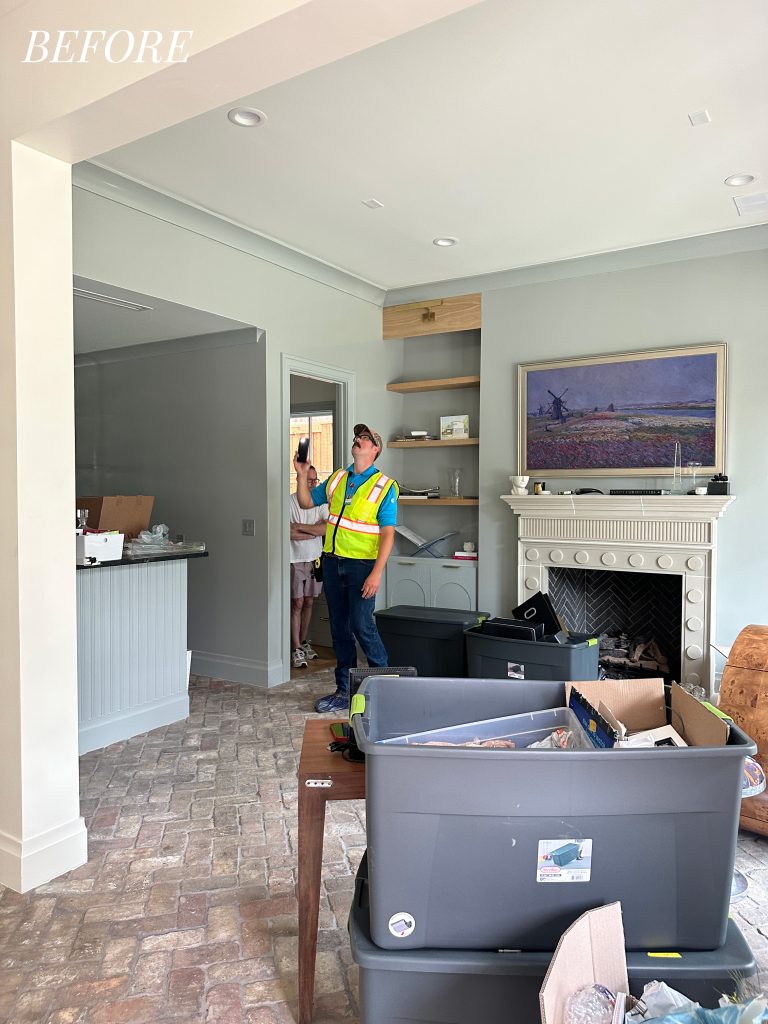
That was the case with this 6,500-square-foot home in University Park. The architecture was complete and the finishes were polished, but the rooms needed more personality, more layers, and a much stronger reflection of the family living there.

Rather than begin again, we focused on the changes that would make the greatest impact: furnishings, wallcoverings, paint, lighting, artwork, and styling. What we call a micro-renovation.

The result proves that transforming a home does not always require tearing it apart.

Designing a Home That Felt More Personal

Our clients wanted their primary residence to feel colorful, collected, and decidedly less like a builder home. They were drawn to pattern, unexpected combinations, and rooms that felt sophisticated without becoming overly serious.

We began with the spaces they used most for entertaining: the living room, dining room, entry, breakfast room, and a multifunctional room that would become one of the most memorable spaces in the house.

Each room developed its own identity, but the home still needed to feel connected. Rich color, sculptural lighting, graphic wallcoverings, and moments of warm metal became the common thread.

A Ladies Lounge Designed for More Than One Purpose

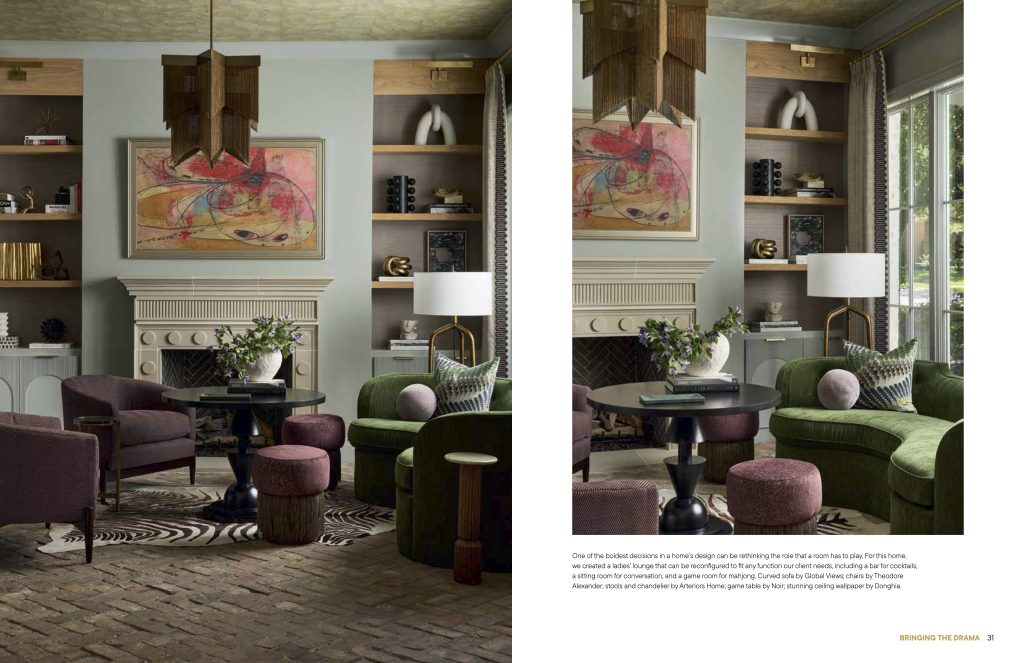
The clients wanted a room where they could play mahjong, have cocktails, entertain friends, or simply settle in and relax. It also needed to accommodate overflow from the dining room and connect to a small home office.

Instead of treating those needs as competing functions, we designed the room around the way it would actually be lived in.

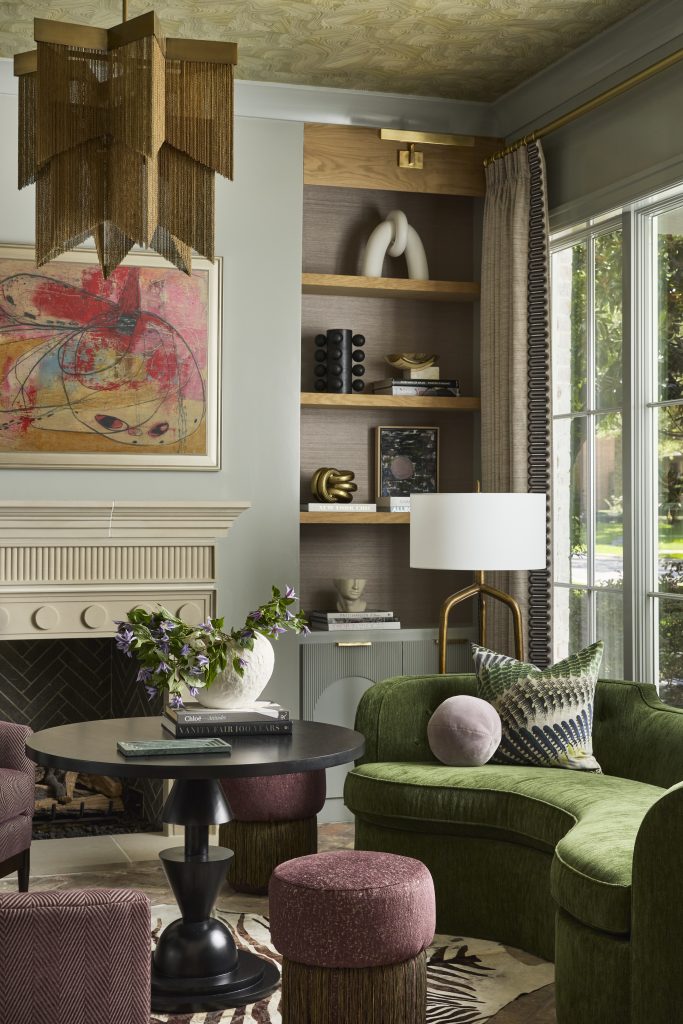
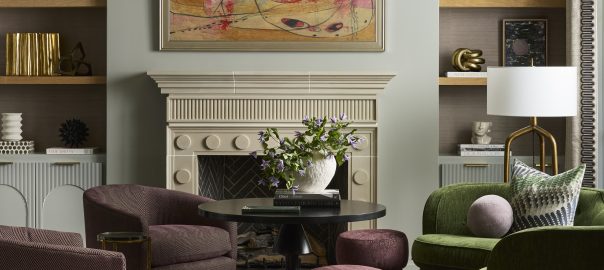
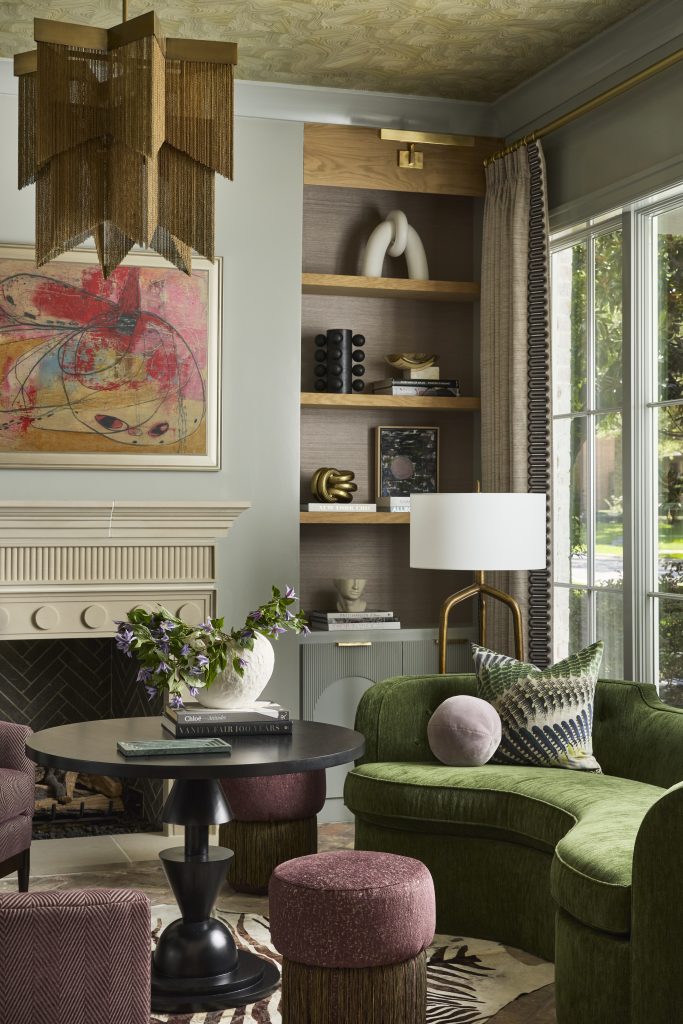
Curved forest-green velvet seating is paired with dusty plum, while a zebra rug grounds the room with a strong graphic moment. Overhead, a tiered brass-fringe chandelier plays against a gold marbled Donghia ceiling wallcovering.

The room feels glamorous, but it is not precious. Furniture can shift, conversations can move around the space, and every seat feels like a good one.

It is a room made for gathering, but also for the particular pleasure of having a space that answers to no one.

A Small Office With a Strong Point of View

Just beyond the lounge, the adjoining office takes a more graphic approach.

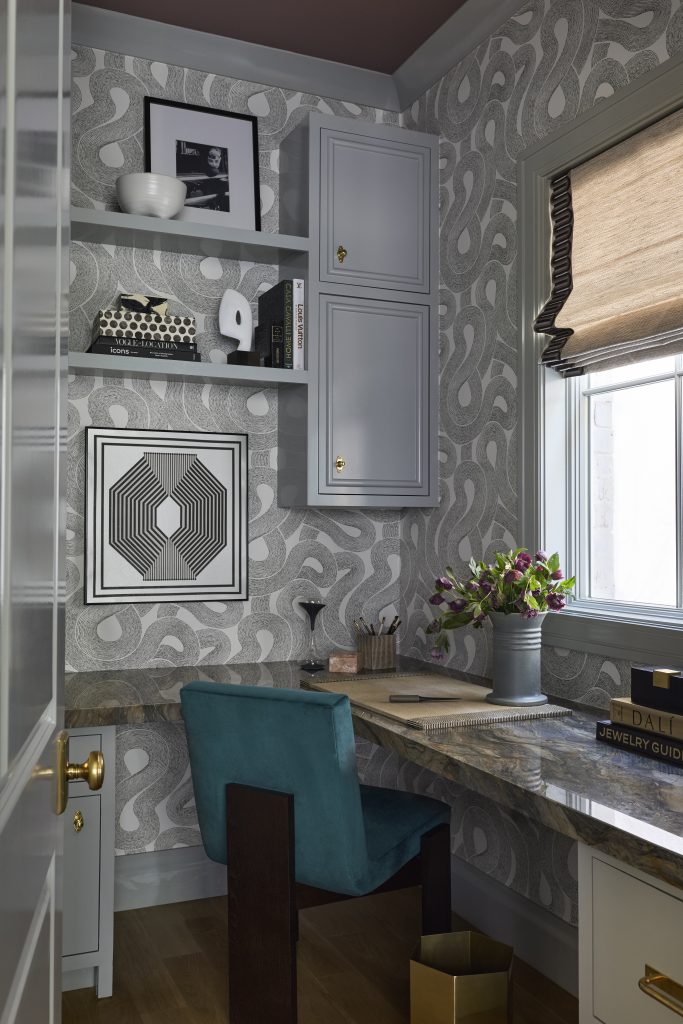
Sweeping black-and-white wallcovering gives the compact room immediate energy. A substantial slab desk introduces natural movement, while custom slate cabinetry keeps the functional pieces of daily life out of sight.

The office may be small, but it was never treated as an afterthought. In a home like this, even the hardworking spaces deserve a clear point of view.

Turning the Dining Room Into an Experience

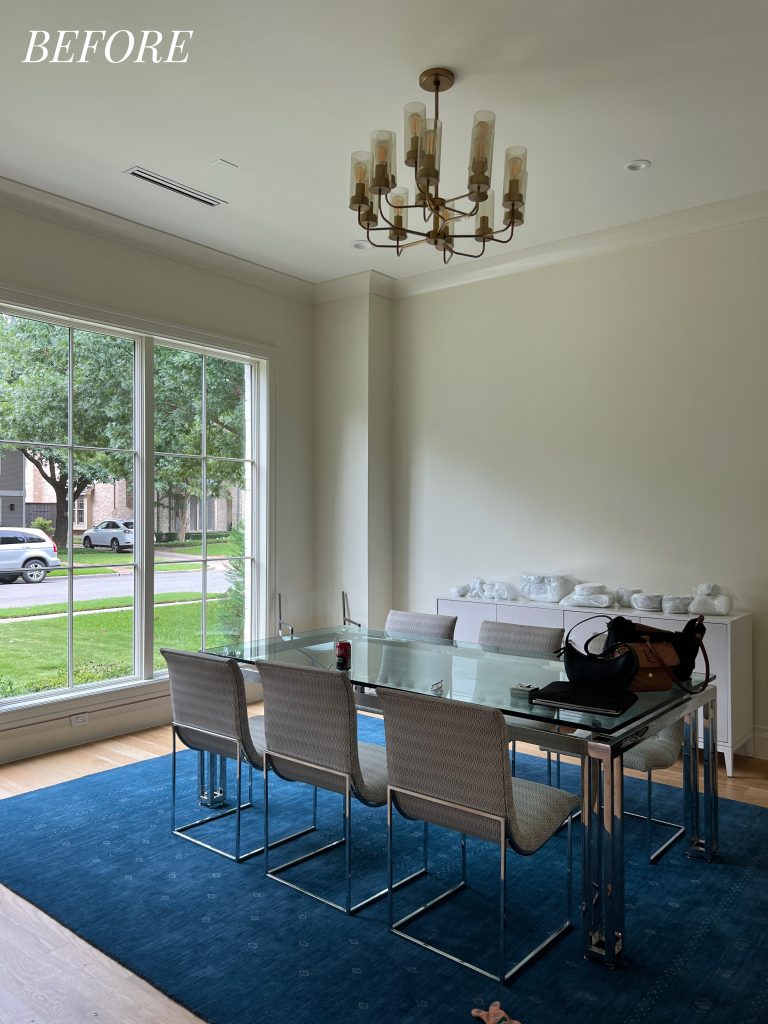
Before the redesign, the dining room was polished but forgettable. We wanted it to feel less like a room reserved for special occasions and more like a reason to create one.

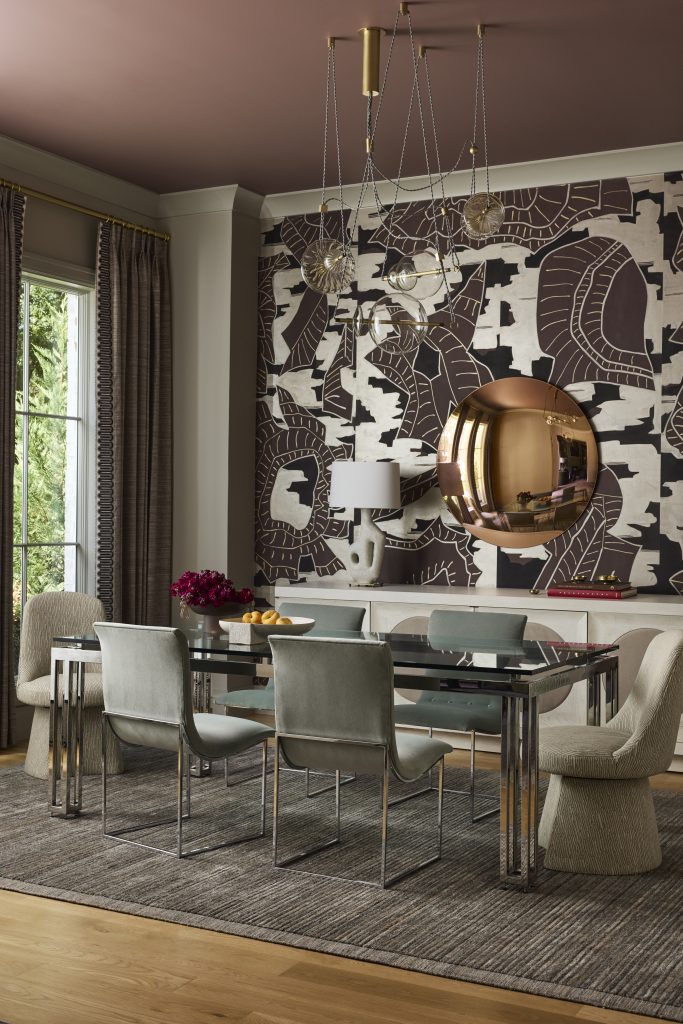
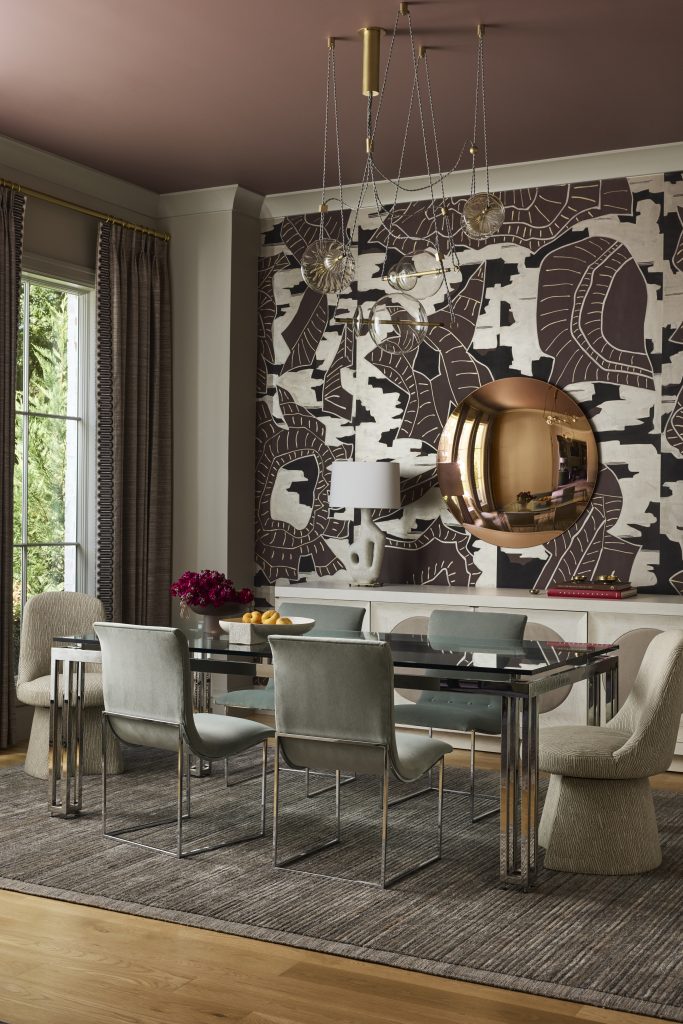
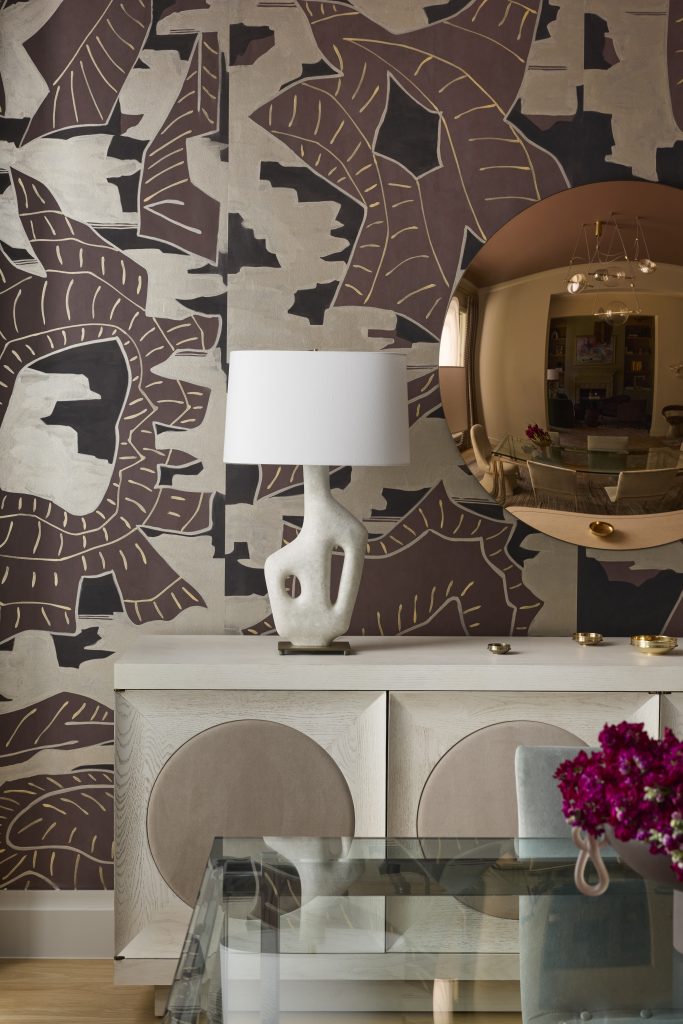
A dramatic Porter Teleo wallcovering now wraps the room like an original work of art. Sculptural lighting creates a jewel-like focal point, while the deep mauve ceiling brings the scale down and makes the room feel more intimate.

We retained the clients’ existing chrome-and-glass dining table, proving that a transformation does not require replacing everything. The right combination of color, light, art, and surrounding pieces can completely change how an existing furnishing feels.

Now, dinner begins before anyone sits down.

Creating Impact Without Starting Over

This is the real opportunity of a micro-renovation. It allows us to preserve what is working while identifying the changes that will completely shift the experience of the home.

For these clients, the transformation was not about following a trend or filling empty rooms. It was about creating a home with enough personality to feel unmistakably theirs.

And sometimes, that is the most powerful renovation of all.

Ready for your home to feel more like you? Share your project with Pulp Design Studios and let’s explore what is possible.

Photography by Cody Ulrich, Styling by Jamie Laubhan-Oliver.

Luxury walk-in shower clad in glossy black tile with a freestanding soaking tub, geometric tile flooring, and black-framed windows.

Portland Primary Suite Transformation: Reimagining Space Without Adding Square Footage

The most successful renovations aren’t always the ones that add more space. Often, they’re the ones that make better use of the space that already exists.

That was certainly the case with this Portland primary suite.

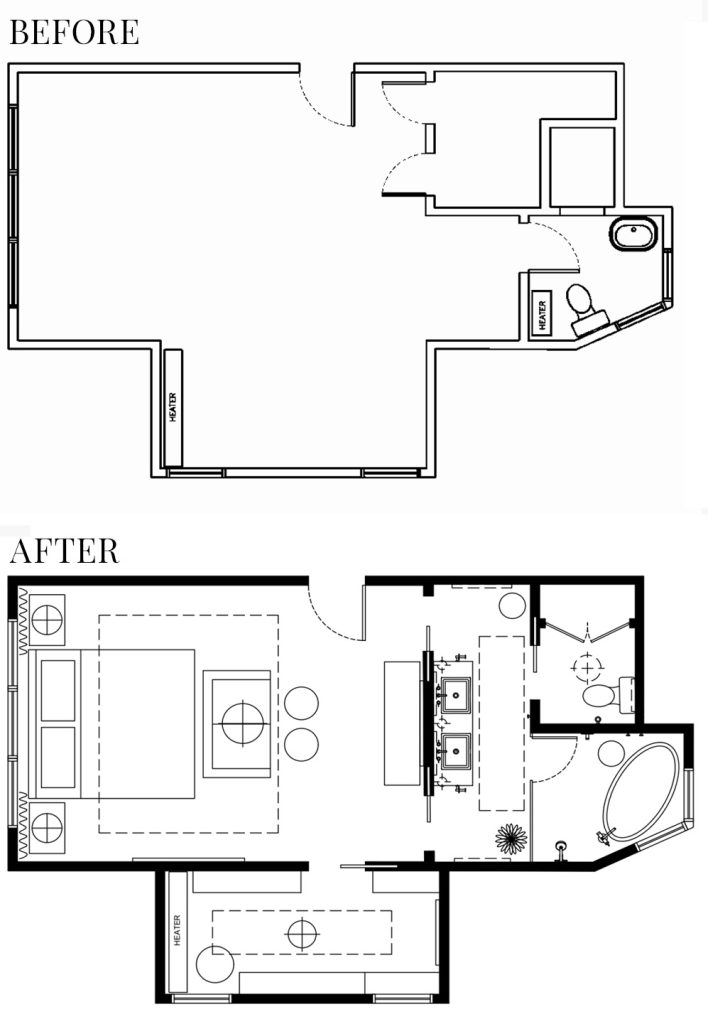
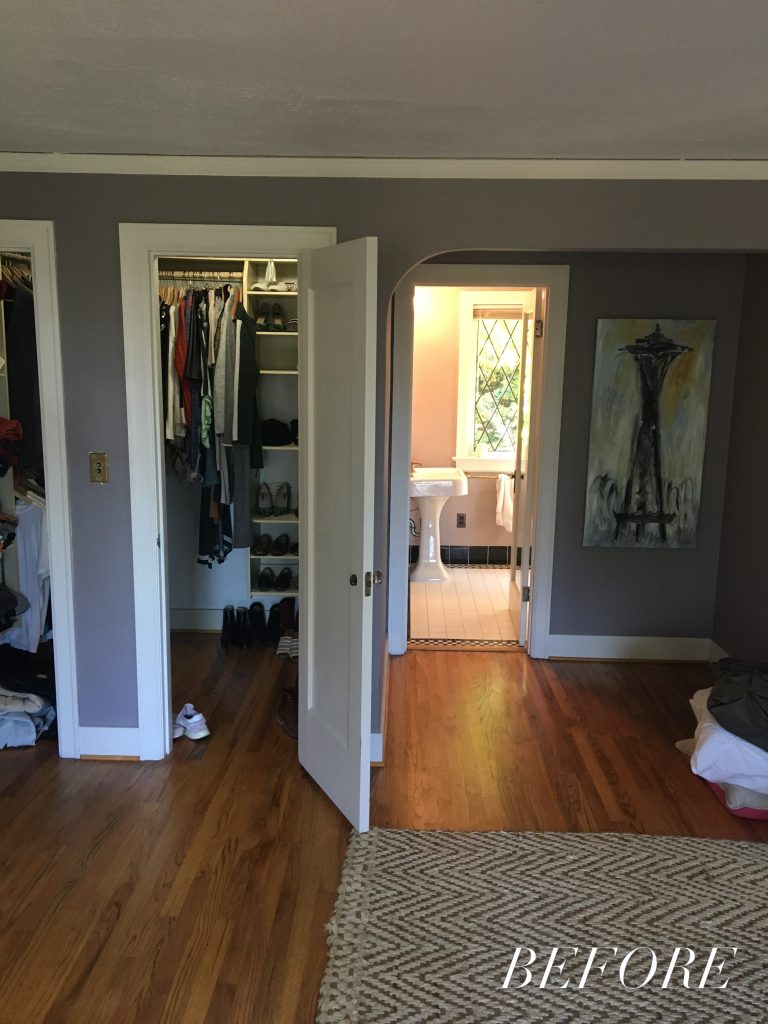
While the original suite offered generous square footage, it lacked the functionality, storage, and flow our clients wanted for everyday living. The bathroom was small and compartmentalized, storage was limited, and the relationship between the bedroom, closet, and bath felt disconnected. The suite had character, but it wasn’t working nearly as hard as it could.

Rather than simply updating finishes, we reimagined the entire experience.

Starting with the Floor Plan

When approaching a renovation, we always begin by asking one question: How can the home better support the way our clients live?

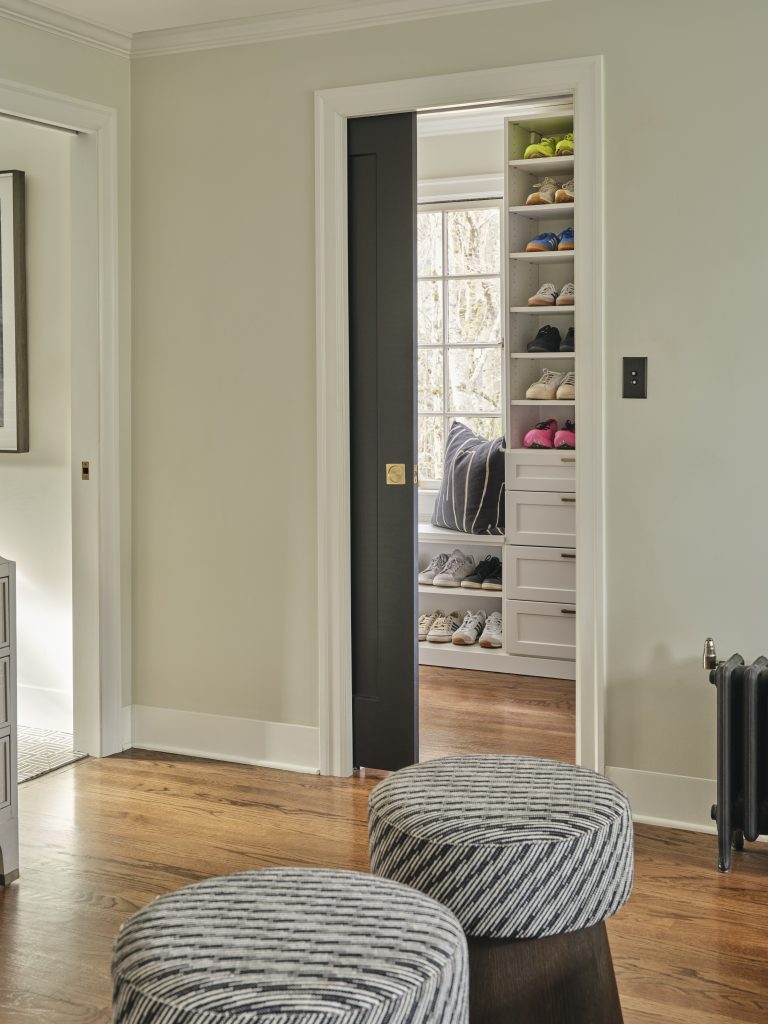
The original layout dedicated a significant amount of space to circulation while limiting the size and functionality of the bathroom. Storage was fragmented between small closets, and the bathroom lacked both the amenities and organization expected in a modern primary suite.

By redistributing square footage rather than adding onto the home, we were able to completely transform the suite’s functionality.

The new floor plan creates distinct zones for sleeping, dressing, bathing, and getting ready, allowing each space to serve a clear purpose while feeling connected to the whole.

What was once a collection of disconnected rooms now functions as a cohesive retreat.

A Spa-Inspired Bathroom with Graphic Personality

The bathroom became the centerpiece of the transformation.

We expanded the footprint and reconfigured the layout to accommodate a dramatic walk-in shower with a freestanding soaking tub positioned within the enclosure. The result feels less like a traditional bathroom and more like a boutique hotel spa.

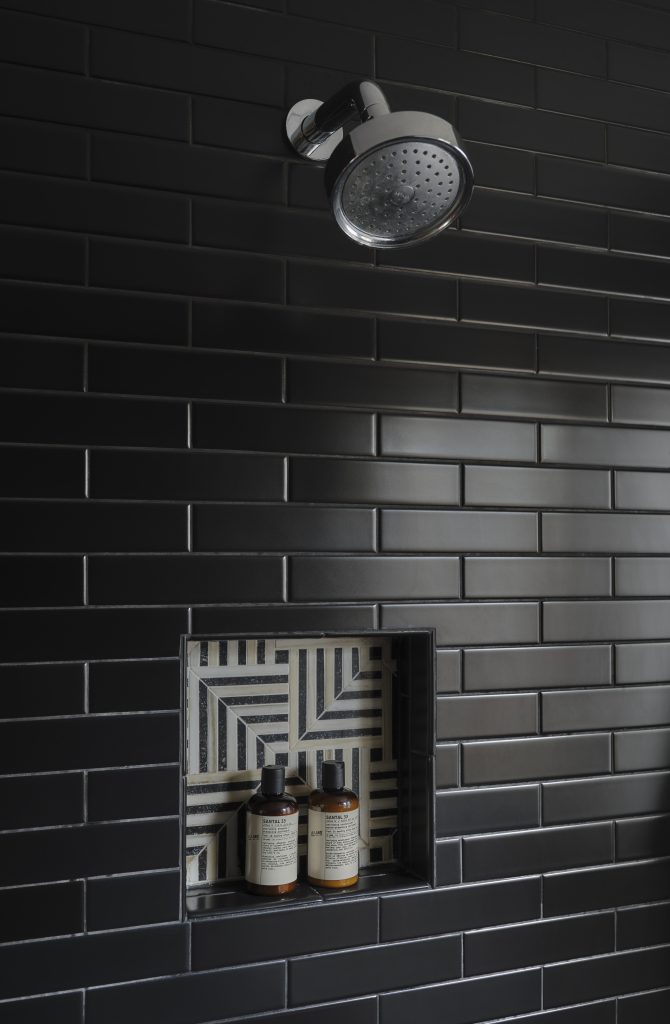
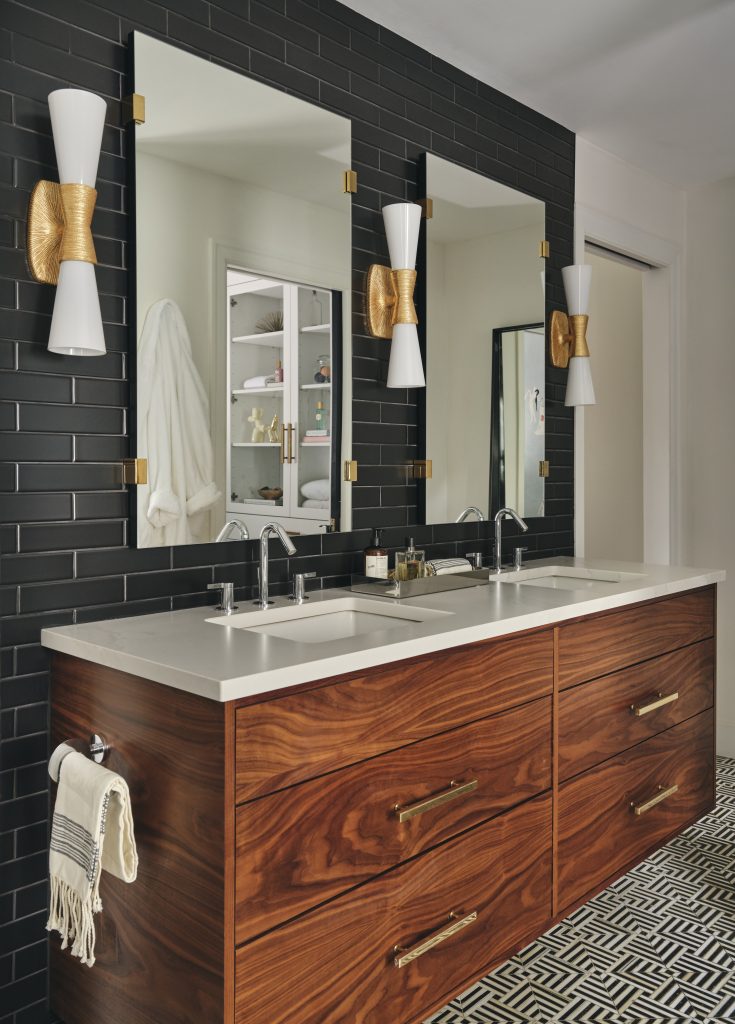
Glossy black tile wraps the shower walls, creating depth and contrast while referencing the black tile details found in the original bathroom. Rather than erase the home’s history, we wanted to reinterpret it through a more contemporary lens.

Underfoot, a bold geometric tile pattern introduces movement and energy while connecting the black-and-white palette throughout the space.

The combination is graphic, timeless, and unapologetically bold.
Luxury walk-in shower clad in glossy black tile with a freestanding soaking tub, geometric tile flooring, and black-framed windows.

Storage Designed Around Daily Life

One of the biggest challenges in the original suite was the lack of practical storage.

A pedestal sink offered little functionality, and closet storage was divided into smaller, less efficient spaces.

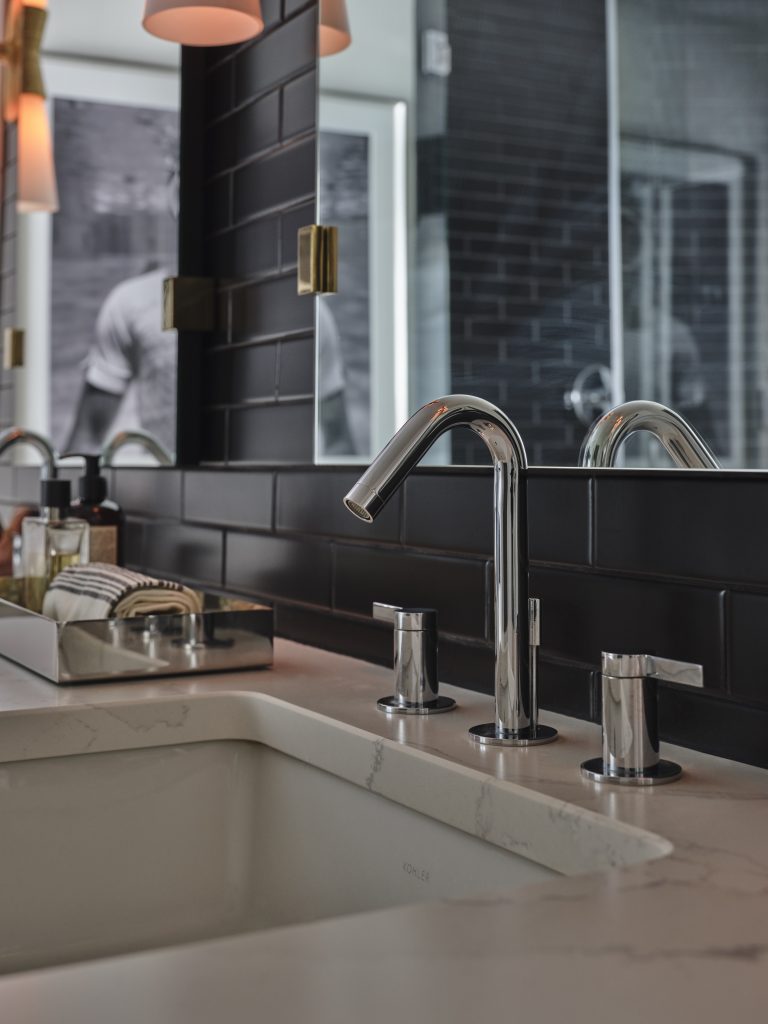
The renovation introduced a custom double vanity with substantial storage, integrated medicine cabinets, dedicated dressing areas, and thoughtfully planned organization throughout the suite.

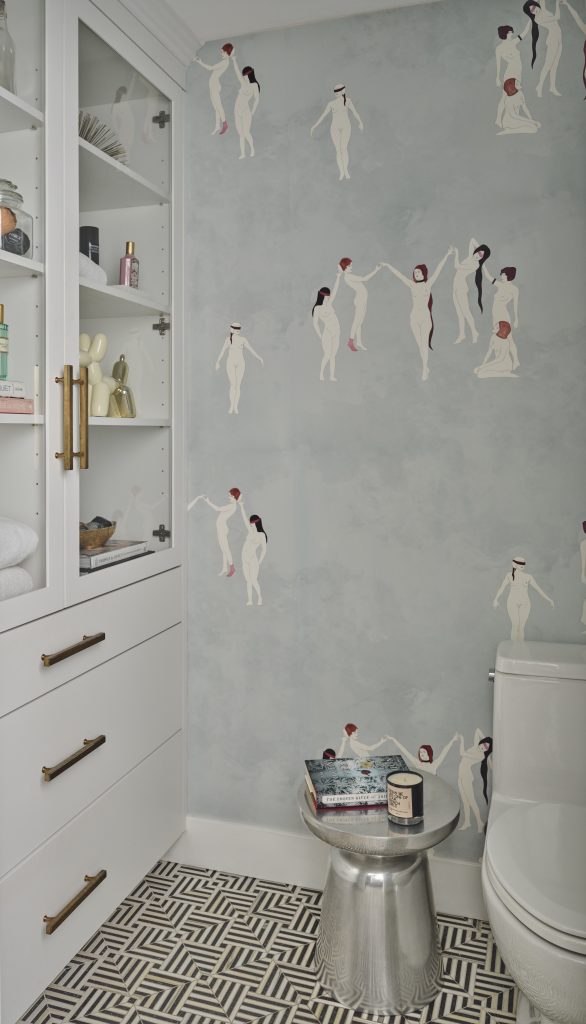
The separate water closet provides privacy, while built-in storage keeps everyday necessities hidden from view, creating a cleaner and more relaxing environment.

Luxury is often less about extravagance and more about ease. Every element of this suite was designed to simplify our clients’ daily routines.
Honoring the Home’s Character

One of the aspects we love most about renovating older homes is finding the balance between preservation and transformation.

This Portland home already possessed beautiful architectural character, and we wanted the new design to feel like a natural evolution rather than a complete departure.

Original proportions, traditional detailing, and the home’s inherent charm remain intact, while contemporary furnishings, striking materials, and layered finishes bring the suite firmly into the present.

The result feels fresh without feeling trendy and sophisticated without sacrificing warmth.
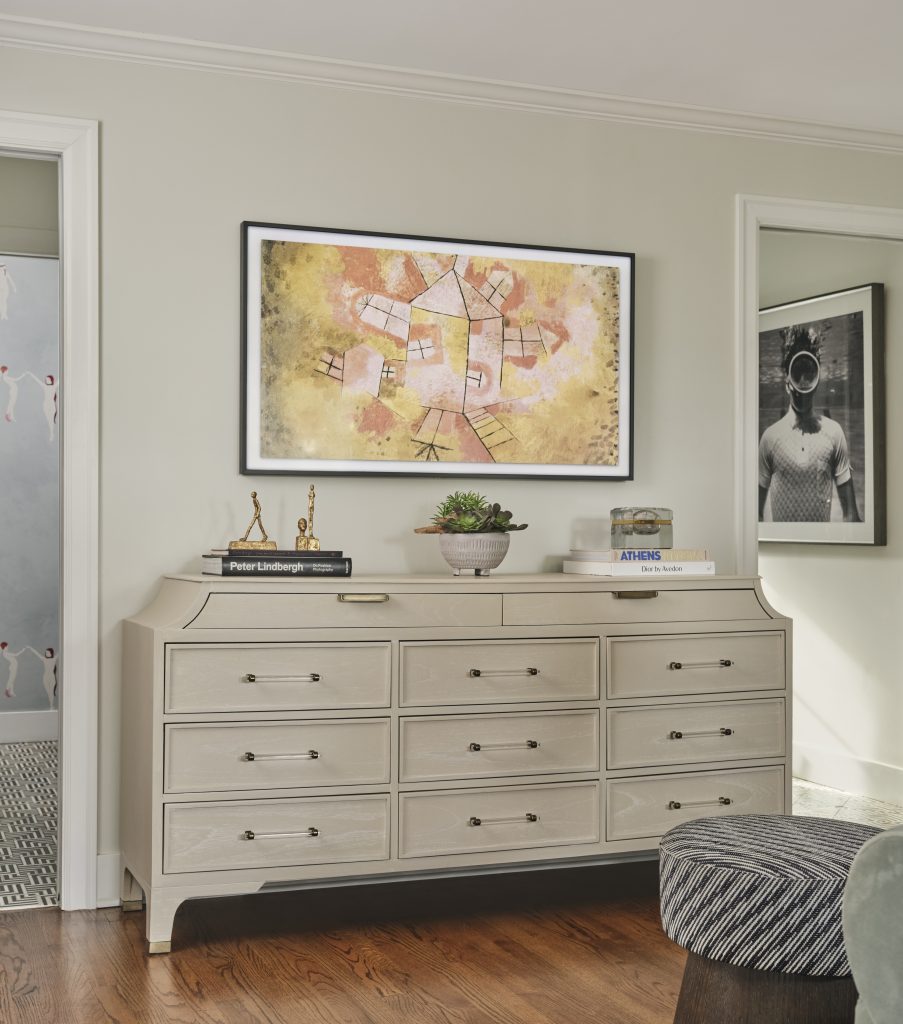
A Retreat Designed for Everyday Living

Today, the primary suite functions entirely differently than it did before.

The bedroom feels calmer and more intentional. The bathroom delivers the experience of a luxury hotel. Storage is integrated seamlessly throughout the space. Every square foot serves a purpose.

Most importantly, the suite now reflects the way our clients want to live.

This project is a reminder that great design isn’t always about creating more space. Sometimes it’s about seeing the potential within the existing footprint and transforming it into something extraordinary.

Because true luxury isn’t measured in square feet. It’s measured in how a space makes you feel.

See the whole home transformation.

Ready to Reimagine Your Home?

If your home has beautiful bones but no longer supports the way you live, our team would love to help you uncover its potential. Contact Pulp Design Studios to tell us more about your project.

interior design entry with original art

8 Luxury Interior Design Client Archetypes: What Kind of Design Client Are You?

Luxury interior design is about far more than aesthetics.

Behind every project is a different motivation. Some homeowners crave originality and artistic expression, while others prioritize efficiency, legacy, emotional transformation, or a seamless turnkey experience. Two clients may have similar homes and similar budgets — yet approach the design process in completely different ways.

At Pulp Design Studios, we’ve learned that understanding how a client thinks about their home is just as important as understanding what they want it to look like.

Because the most successful luxury interior design projects happen when there is alignment between a client’s values and the design process itself.

Take the Design Archetype Quiz

Luxury residential interior design project by Pulp Design Studios featuring layered textures and custom furnishings.

Why Client Archetypes Matter in Luxury Interior Design

Traditional client categories — budgets, demographics, square footage — only tell part of the story.

In reality, luxury homeowners invest differently based on emotion, lifestyle, personality, and priorities. Some clients are willing to splurge on custom craftsmanship because they value artistry and originality. Others care most about ease and are happy to invest heavily in a full-service interior design experience that eliminates decision fatigue.

The psychology behind luxury design decisions is often far more important than the budget itself.

Understanding client archetypes helps interior designers create a more personalized design process, improve communication and trust, tailor budget allocation strategies, anticipate decision-making styles, and create more aligned, successful projects.

For homeowners, understanding your own design archetype can help clarify what you truly value in your home — and what kind of interior design experience will feel most fulfilling.

Interior Designers meeting at their design studio

The 8 Luxury Interior Design Client Archetypes

1. The Visionary Collector

The Client Who Values Originality

Some clients want a beautiful home. The Visionary Collector wants a home nobody else has.

This client sees interior design as a form of personal expression. They are drawn to custom furnishings, vintage finds, artisan craftsmanship, collected art, and spaces that feel deeply layered and emotionally rich. They are often willing to invest heavily in statement-making moments that create individuality and soul.

For the Visionary Collector, design is not simply functional — it is cultural, emotional, and identity-driven.

  • What they value: originality, artistic expression, bespoke interiors, craftsmanship, storytelling
  • What they invest in: custom furniture, art, vintage pieces, unique lighting, highly curated interiors

Layered luxury living room with custom furnishings original art and custom interior design details.

2. The High-Performance Executive

Luxury Through Ease and Efficiency

For this client, luxury means convenience.

The High-Performance Executive values expertise, organization, and seamless execution. They are not looking to manage every detail themselves — they are hiring a trusted interior designer to lead the process confidently and efficiently.

These clients often prioritize full-service interior design because they understand that time is one of their most valuable resources.

  • What they value: efficiency, expertise, white-glove service, clarity, turnkey execution
  • What they invest in: project management, full-service design, streamlined decisions, comprehensive oversight

3. The Legacy Builder

Designing a Forever Home

Some luxury homes are designed for the present. Others are designed for generations.

The Legacy Builder values timelessness, craftsmanship, and emotional permanence. These clients are often creating a forever home — a place where traditions are built, holidays are hosted, and memories accumulate over time.

They tend to invest heavily in architecture, millwork, kitchens, and materials that age beautifully.

  • What they value: family, permanence, timeless design, craftsmanship, emotional connection
  • What they invest in: custom millwork, architectural detailing, natural stone, heirloom-quality materials

Timeless luxury home interior with warm layered finishes.

4. The Experience Curator

Creating a Home That Feels Like a Boutique Hotel

This client wants their home to feel immersive.

They are inspired by boutique hotels, luxury resorts, wellness retreats, and hospitality design. They care deeply about atmosphere, lighting, mood, and sensory experience.

For the Experience Curator, luxury is a feeling.

  • What they value: atmosphere, mood, sensory experience, entertaining, wellness
  • What they invest in: lighting design, spa bathrooms, entertaining spaces, experiential details

5. The Luxury Optimizer

High Impact Luxury Design

The Luxury Optimizer understands the power of visual impact.
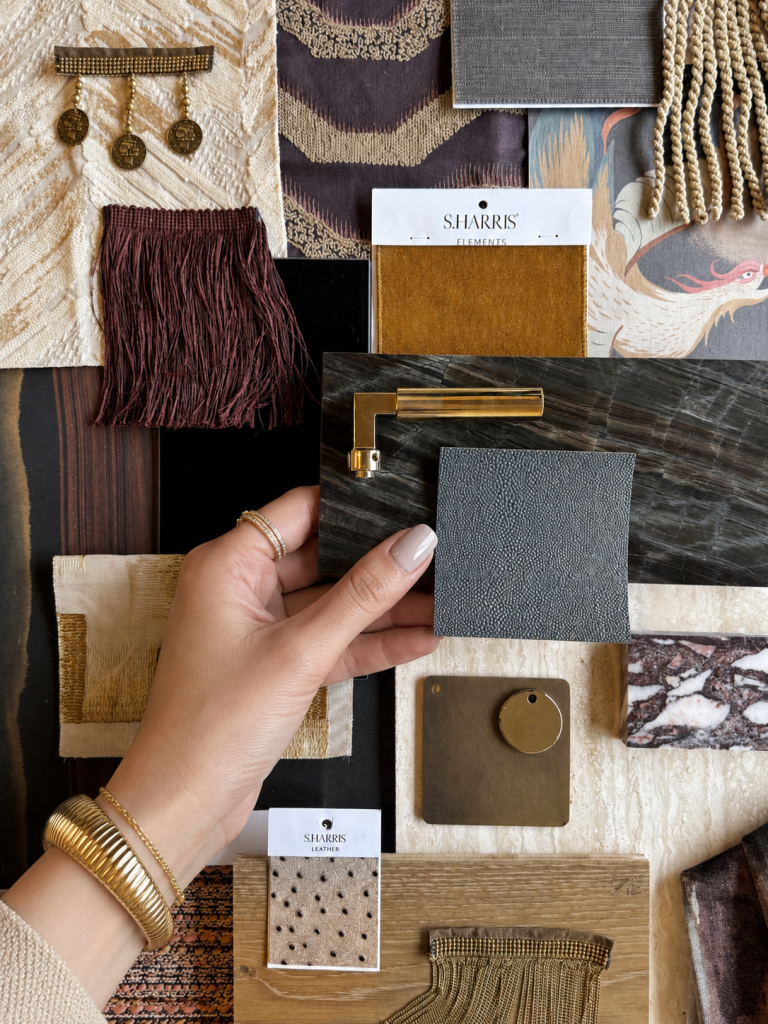
This client wants their home to feel elevated, polished, and luxurious. They tend to focus investment on highly visible moments that create immediate emotional impact — dramatic stone, statement lighting, unforgettable powder rooms, or custom architectural details.

  • What they value: prestige, visual impact, perceived value, elevated finishes, first impressions
  • What they invest in: hero spaces, statement materials, visible luxury upgrades, dramatic focal points

Luxury powder bathroom with dramatic stone and designer lighting.

6. The Validation Seeker

Wanting Confidence in the Design Process

Design can feel deeply vulnerable.

The Validation Seeker often wants reassurance throughout the project and may struggle with decision fatigue or fear of making expensive mistakes. They value structure, communication, and clarity above all else.

The key to success with these clients is reducing overwhelm and building trust through process.

  • What they value: reassurance, predictability, structure, communication, confidence
  • What they invest in: guidance, collaborative review, clear milestones, decision support

7. The Aspiring Luxury Client

Investing in Transformation

For this client, luxury interior design represents transformation.

They are often stretching financially to create a home that reflects the lifestyle they are growing into. They crave visible change, emotional impact, and a sense of elevation.

  • What they value: aspiration, lifestyle elevation, visible transformation, emotional impact
  • What they invest in: statement renovations, dramatic redesigns, visible upgrades, aspirational interiors

8. The Creative Collaborator

A Shared Creative Process

The Creative Collaborator genuinely loves design.

They enjoy discussing ideas, sourcing inspiration, exploring materials, and participating in the creative process. Collaboration energizes them.

The best projects with these clients happen when there is a balance between creative dialogue and strong design leadership.

  • What they value: collaboration, discovery, creativity, process, personalization
  • What they invest in: meaningful details, collected pieces, custom layers, thoughtful curation

Interior designer presenting luxury home design concepts and material selections.

Which Luxury Interior Design Archetype Are You?

Every homeowner approaches design differently. Some prioritize originality. Others value efficiency, legacy, atmosphere, or transformation. Understanding your interior design archetype can help clarify what matters most to you — and what type of design process will feel most aligned.

Take the Design Archetype Quiz

Frequently Asked Questions About Luxury Interior Design

What is a luxury interior design client archetype?

A client archetype is a personality-based profile that reflects what a homeowner values most during the interior design process, from artistic expression to functionality and legacy.

Why do luxury interior design clients spend differently?

Luxury homeowners prioritize different emotional outcomes. Some invest in craftsmanship and permanence, while others focus on convenience, atmosphere, or visual impact.
How do interior designers identify the right clients?

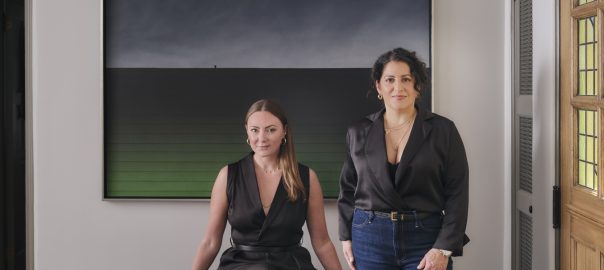
Experienced interior designers look beyond budget and aesthetics to understand motivations, communication styles, investment priorities, and decision-making behavior. We created a video on the topic of selecting clients.

What makes a successful interior design project?

The most successful luxury interior design projects happen when there is alignment between the client’s values, investment level, communication style, and the designer’s creative process.

Ready to Create a Fearless Home?

At Pulp Design Studios, we believe great design starts with understanding how people want to live.

Whether you’re renovating a forever home, designing a luxury retreat, or creating a dramatic transformation, the best interiors are deeply personal — and built around the people who live inside them.

Take the Quiz
Explore Our Portfolio
Inquire About Your Project


Interior Designers- need help understanding your own client archetypes?

Our client archetype framework was developed independently through our own experience working with luxury residential clients and for use as a tool for client communication. However, our friend and industry peer, Cheryl Clendenon, has been coaching interior designers around similar client psychology and archetype concepts for years. If you’re an interior designer looking for deeper insight into designer/client alignment, we highly recommend checking out her Damn Good Workshops.

Four Ideas That Define an Iconic Home

Pulp is known for designing iconic and unique homes for our clients – with personality and style that you won’t find anywhere else. It’s a signature philosophy that defines fearless design, featured in our first book that you can preorder now! But what is it that really makes a home iconic? We have four things that we focus on in every single space that we design!

1. Innovative Ideas

Whether it’s a clever solution for a challenging space or a little surprise we’ve layered into a room, Pulp is known for thinking out of the box. In a Seattle home, we crafted a mural wall for our artistic clients. But the surprise is when the mural slides back to reveal a fabulous art studio. We’ve crafted hidden wine storage, unique outdoor living spaces, multipurpose rooms, and ideas that really function for our clients and the way they live in their homes.

2. Custom Design

A cookie-cutter home will not ever be considered iconic. The rooms have to stand out and have a viewpoint. The only way you can achieve that is with custom design. For a Plano entertainment lounge, we created a bespoke bar inspired by a chic lounge. It’s bold, sculptural, and designed for connection. We wanted it to feel like a destination within the home, where every cocktail feels like an experience. Custom furniture, customized lighting, or full-on, just-for-you rooms are the only way to make your home really stand out from the crowd.

3. Memorable Art

We love working with clients who have great collections of art. We also curate individual pieces and full collections for clients who don’t have the time to search out fabulous original art. That’s what we’re here for! Memorable paintings, sculpture, drawings, and photography really set a room apart. Those things set the tone for your home and draw all eyes. Anything that creates conversation is going to make your home one for the ages.

4. Personal Style

If your home doesn’t really show guests who you are, then it definitely is not a bold, iconic, or fearless. Books, collections, color palettes, and accessories should give clues about who you are and what you love. Without those personal touches, you might as well live in a showroom.

If you’re ready for your own iconic home, give the Pulp team a call. We’re ready to give you a bold space that reflects who you are and how you want to live!

LIVING BY DESIGN SHOWHOUSE | GUEST SUITE BY PULP DESIGN STUDIOS

Guest rooms are often designed to be “nice enough.”

Comfortable. Functional. Finished.

But rarely… memorable.

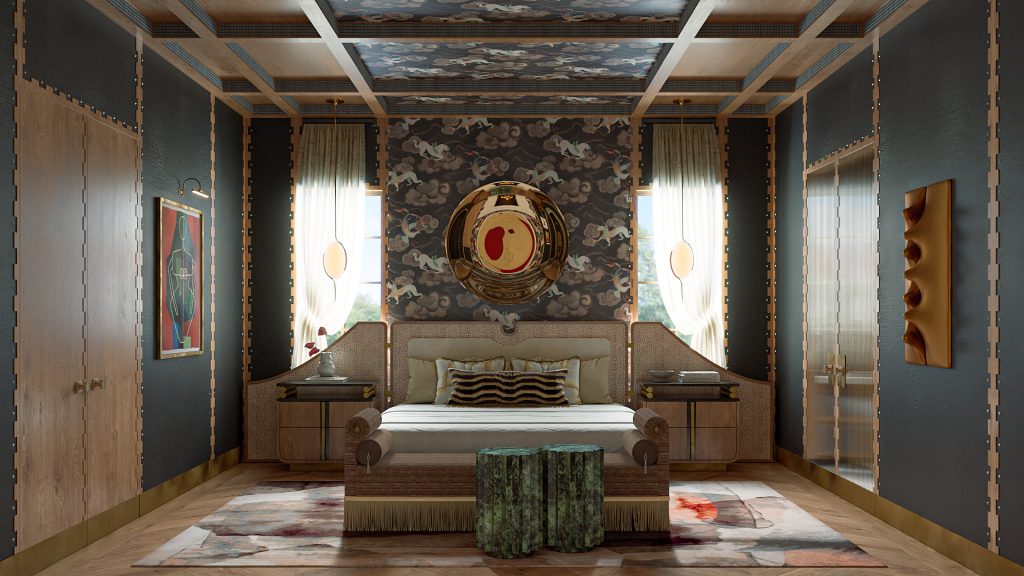
For the Living by Design Virtual Showhouse, we approached this space differently—designing a hotel-inspired guest suite that feels immersive, intentional, and transportive.

Because the best spaces don’t just look good.
They change how you feel the moment you walk in.

And that’s exactly how we design for our clients.


The Concept: Designing for Experience, Not Just Aesthetics

When we design a home, we’re not thinking in terms of rooms—we’re thinking in terms of experience.

How do you enter the space?
What do you notice first?
Where does your eye go next?
How does it feel in the morning? At night?

This guest suite was designed like a boutique hotel—where every detail contributes to a larger, cohesive feeling.

And that same thinking carries into every project we do.


The Bedroom: Creating Mood Through Layering

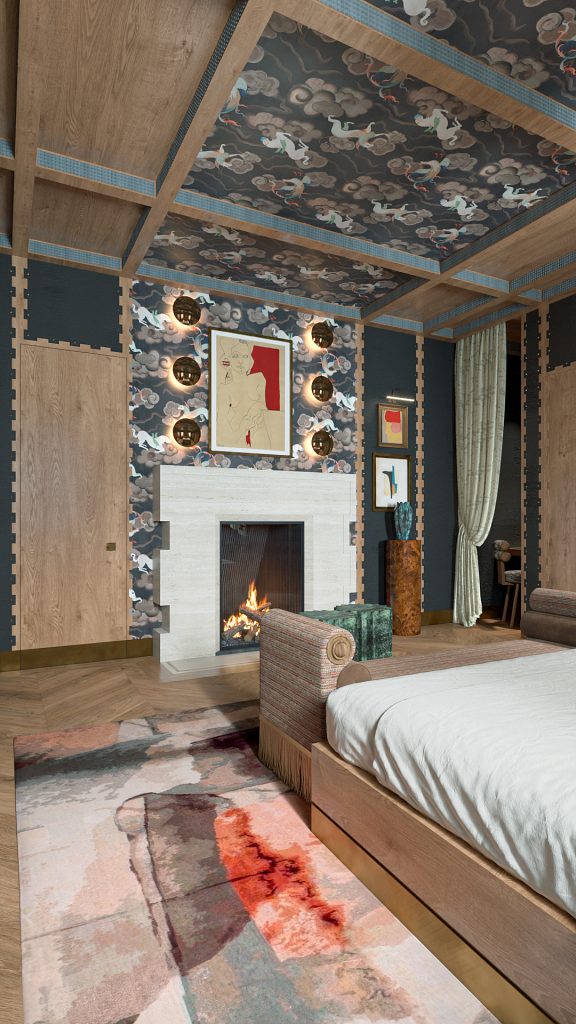
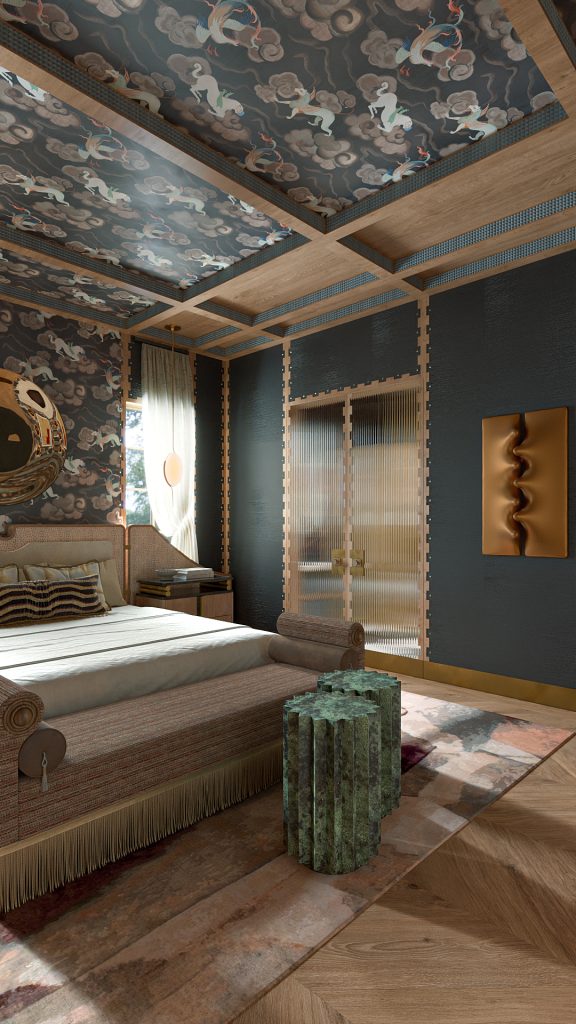
We designed the bedroom to feel like an escape from the rest of the home—moody, layered, and slightly unexpected.

The architecture does a lot of the work:

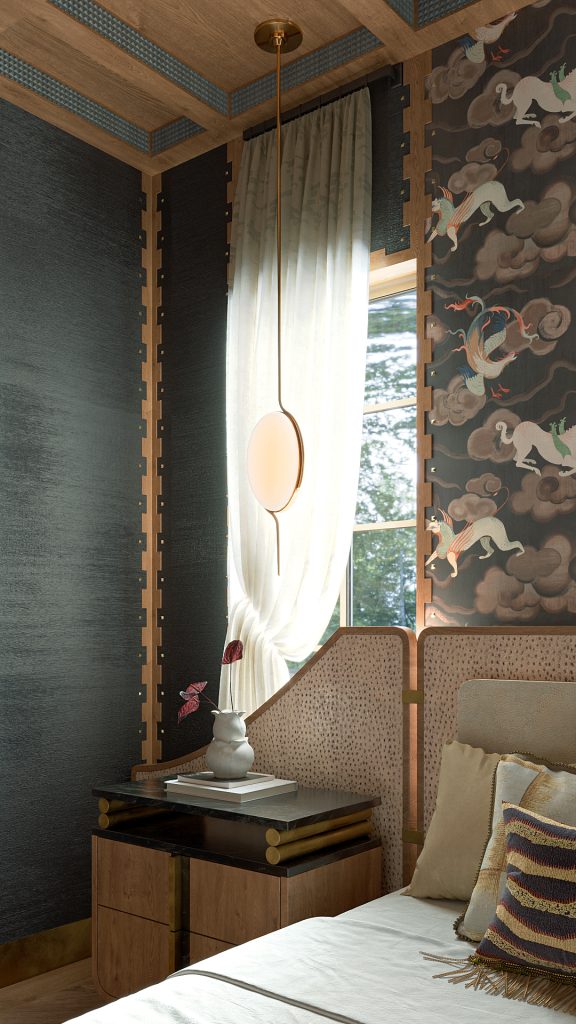
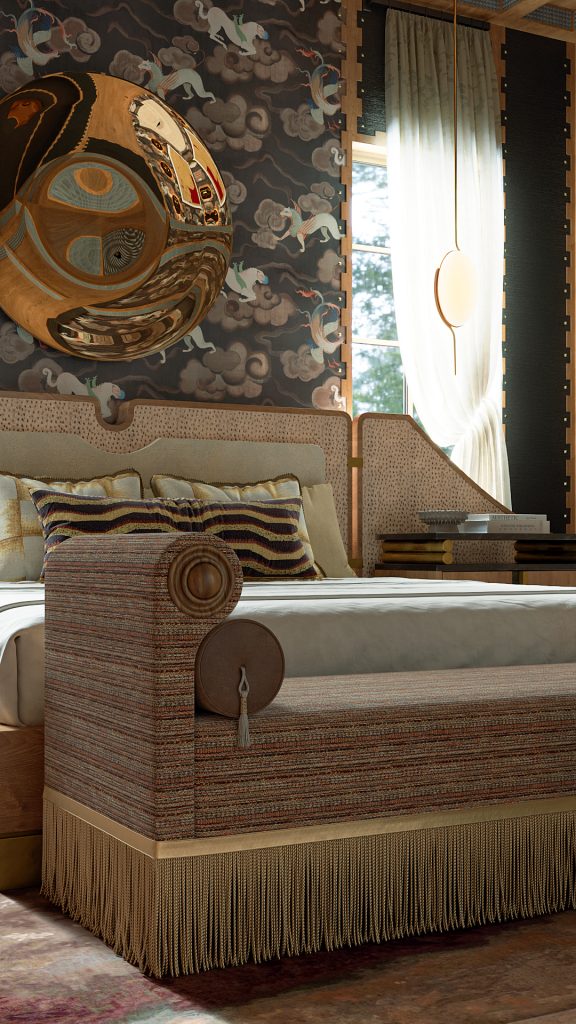
  • A custom bed wall that integrates nightstands and paneling
  • Deep, saturated wall color framed by warm wood millwork
  • A coffered ceiling with a surreal mural that adds movement and depth

But what makes it work is the balance.

Structure paired with softness.
Pattern grounded by repetition.
Materials that contrast, but still relate.


The Ceiling Moment: Designing What Most People Ignore

Most people stop designing at eye level.

We don’t.

The coffered ceiling with mural detailing creates a full-room experience—it draws you in, adds dimension, and changes the way the space feels throughout the day.

This is something we bring into our client work all the time:
Not necessarily murals—but intentional ceilings, architectural detail, and layered planes that make a room feel complete.

Because when every surface is considered, the space feels different.


Material Story: Why Layering Creates Depth

In both showhouses and client homes, we rarely rely on a single material to carry a space.

Instead, we layer:

  • Wood for warmth
  • Stone for weight and permanence
  • Metal for reflection and contrast
  • Textiles for softness and movement

Here, those materials are pushed further—but the principle is the same as in our residential projects.

It’s not about using more.
It’s about using materials with intention.


The Bathroom: Where We Push the Boundaries

The bathroom is where we allowed ourselves to be more expressive.

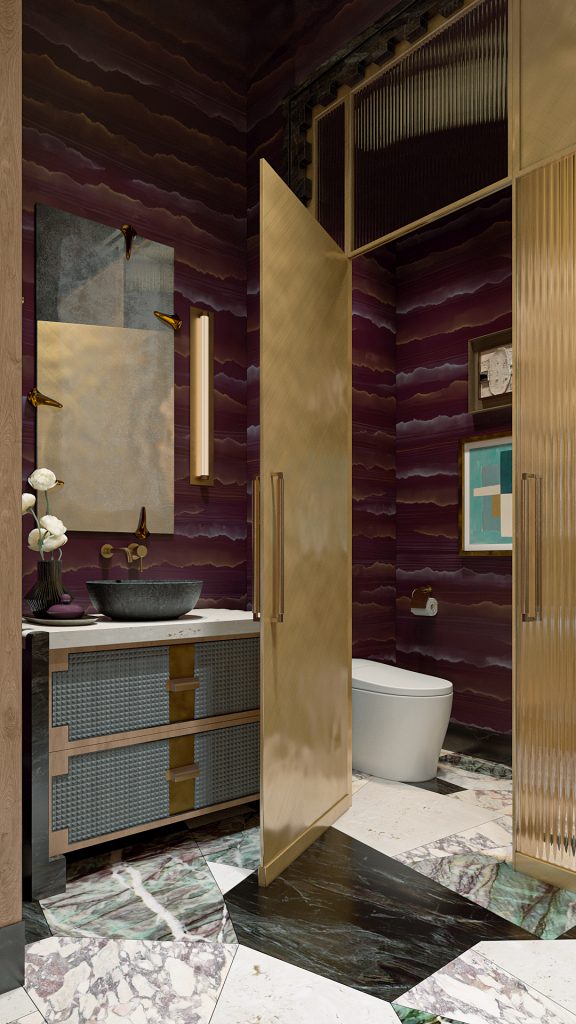
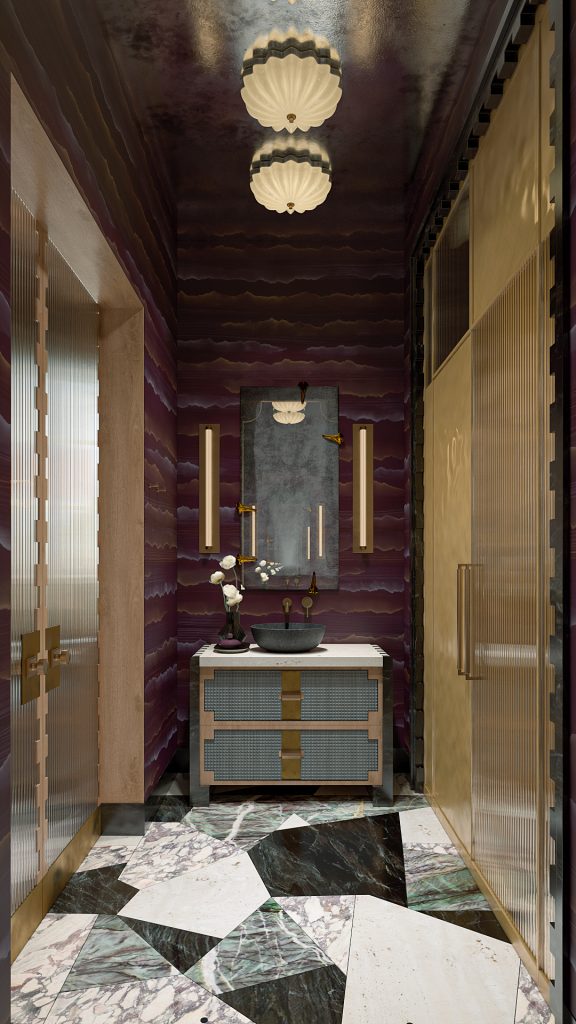
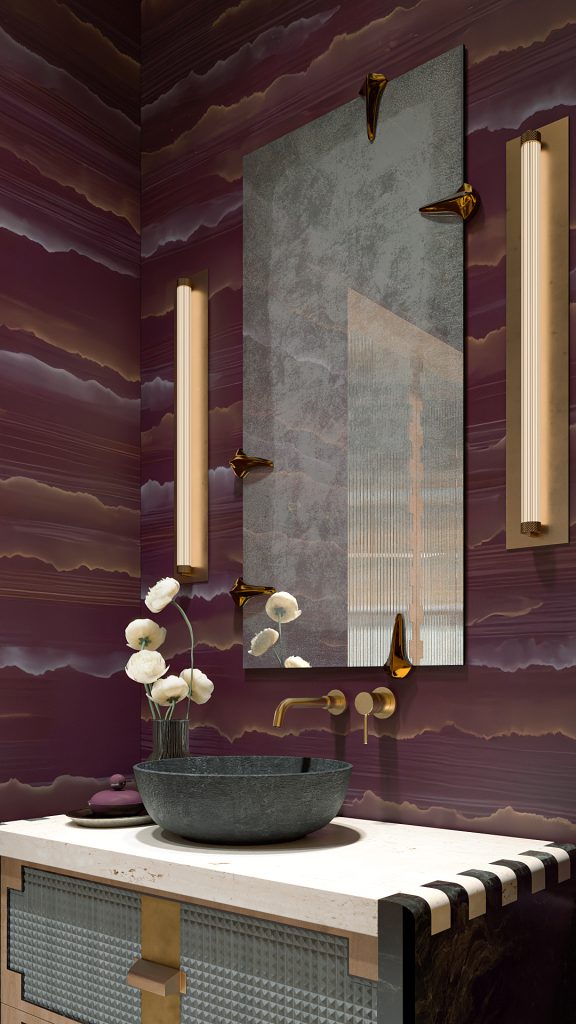
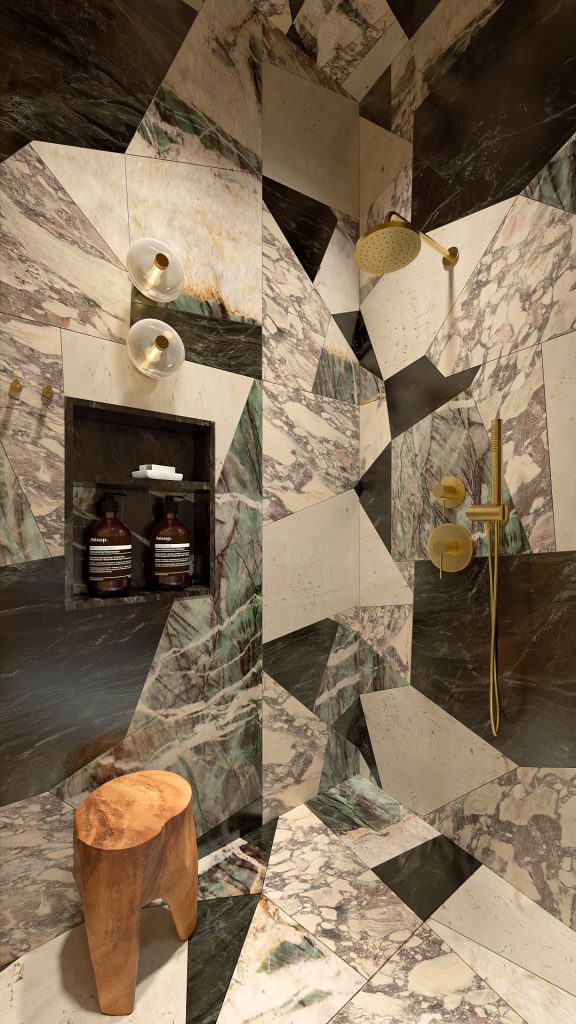
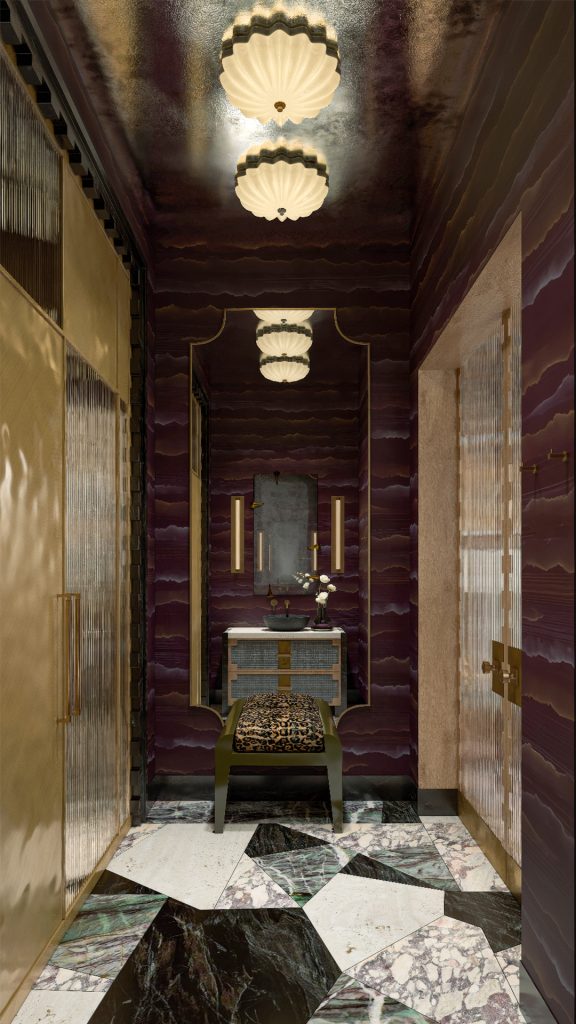
The geometric stone installation—a mix of marbles cut and composed into a fractured pattern—turns the entire space into an experience.

It’s bold. It’s immersive. It’s not subtle.

But here’s the key:
In client homes, we apply this same idea in a more tailored way.

Maybe it’s:

  • A statement slab
  • A unique tile layout
  • A material transition that creates movement

The goal isn’t to replicate the showhouse.
It’s to translate the thinking behind it.


Designing for Function: The Hidden Luxury

Experiential design isn’t just visual—it’s functional.

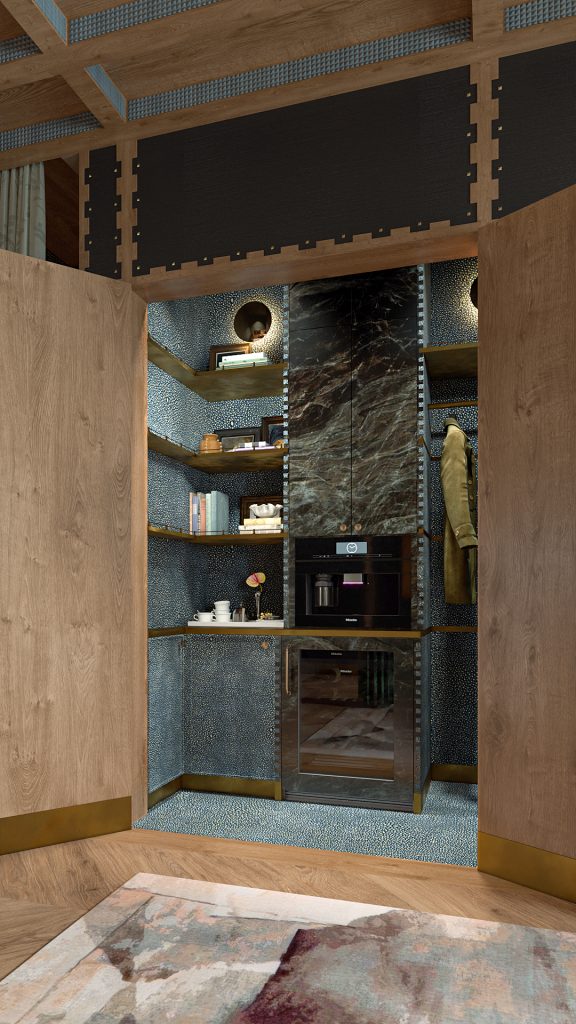
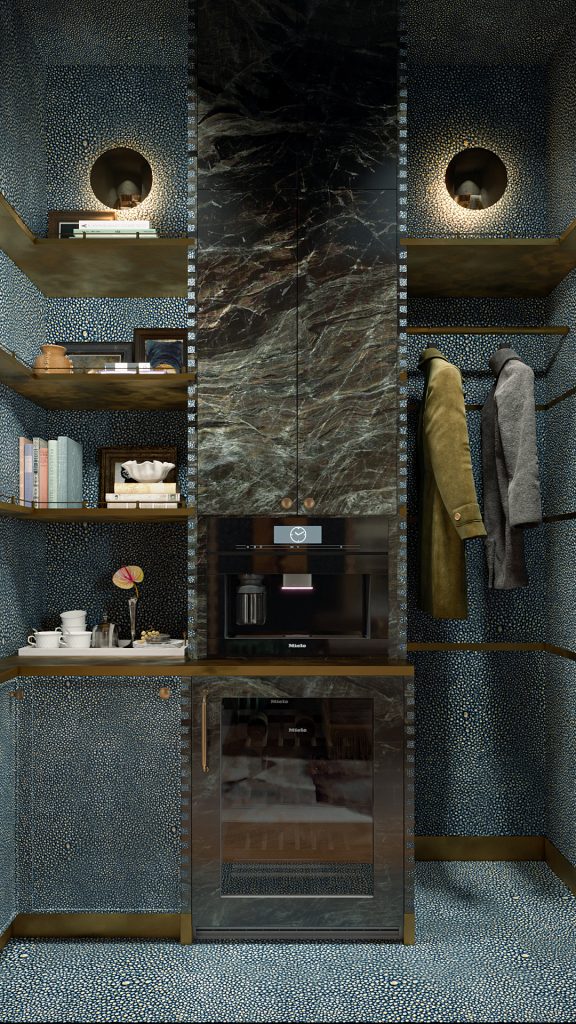
Behind custom doors, we integrated a coffee bar with Miele appliances, allowing guests to move through their morning without leaving the suite.

This is something we think about constantly in our projects:
How does the space actually support daily life?

Because the most luxurious homes aren’t just beautiful—
they’re effortless to live in.


Transitions Matter: How You Move Through a Space

One of the most overlooked parts of design is transition.

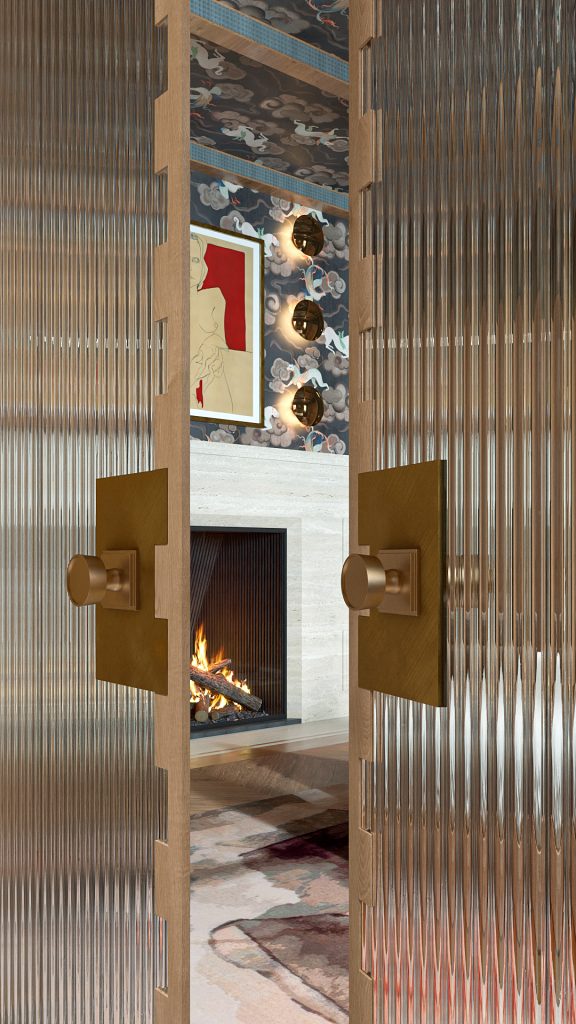
The reeded glass doors, the framed openings, the way one space reveals the next—these moments shape how a room is experienced just as much as the materials themselves.

In our client work, this often shows up in:

  • Thoughtful sightlines
  • Layered entries
  • Subtle separation between spaces

Because a well-designed home isn’t just a collection of rooms—it’s a sequence.


How This Translates to Real Homes

Showhouses give us the freedom to push ideas further—but the thinking behind them is exactly what we bring into our client projects.

We design homes that are:

  • Layered, not flat
  • Intentional, not trend-driven
  • Experiential, not just visual

Sometimes that means bold moments.
Sometimes it means restraint.

But it always means designing with a clear point of view.


Explore the Living by Design Showhouse

This guest suite is part of the Living by Design Virtual Showhouse, presented with Luxe Interiors + Design.

👉 Explore the full showhouse

National Media Partner: Luxe Interiors + Design
Architecture: Kigerman AD
3D Visualization: YouSee
Produced by: Embello

Featured Partners:
Miele
Western Window Systems
Ferguson Home
Baldwin Hardware
Eggersmann
Emtek
Fabricut
Ortal
Regina Andrew
Stark Carpet
Studio M Lighting
Ultrasuede

Exclusive Look: Pulp’s First Book!

At Pulp, we believe in pushing boundaries, in thinking differently about design and how our clients live in their homes. So when we had the chance to write our first book, we knew it would have to be something that not only reflected our core principals, but also would be out-of-the-box in its concept. We didn’t want to publish a book that just showed pretty rooms – although we’ve designed plenty of those! We wanted to capture the essence of what makes us Pulp, and the bold magic that we create in the homes we design. We could not be prouder to announce the title that really reflects all of that: Fearless Design.

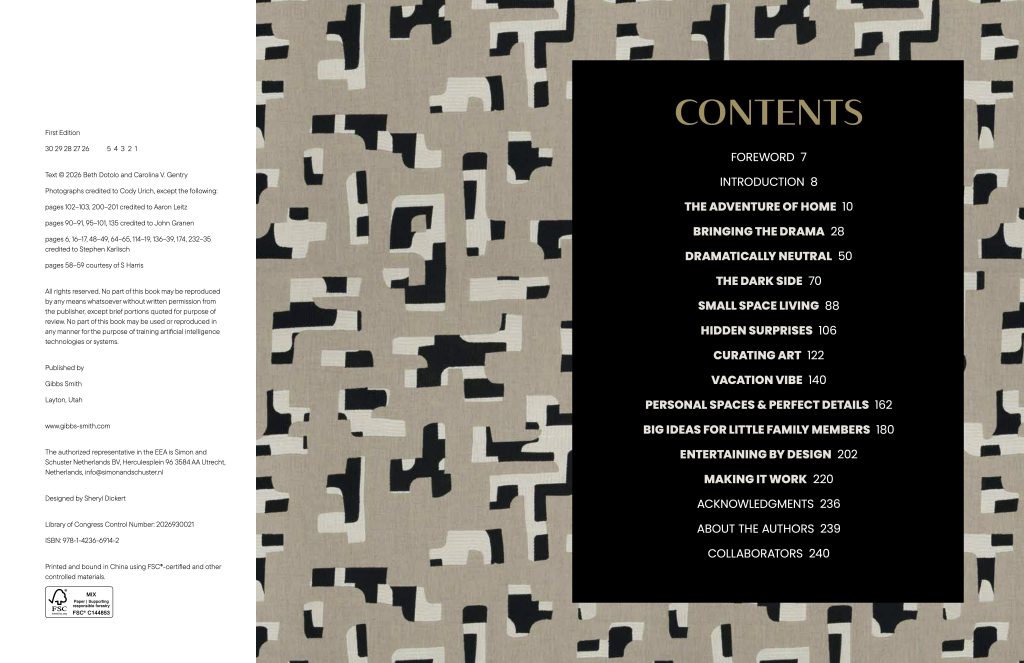
Available for pre-order right now, Fearless Design is a celebration of risk, refinement, and unapologetic individuality — and it features the homes, the stories, and the evolution of Pulp Design Studios. In this post, we’re giving you an exclusive first look inside the book that we’ve been working on for two years! The projects, many of which have never been seen before, truly showcase Pulp’s design philosophy. This book will give you permission to actually live in your home — boldly, personally, and without apology. And it will show you how to define your own version of fearless design.

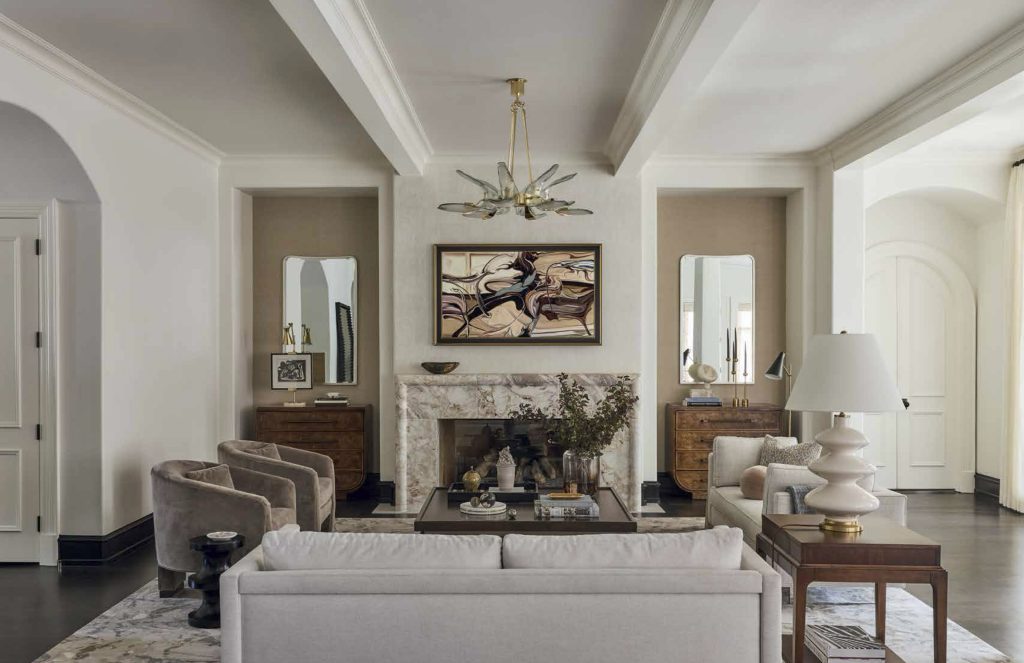
That could be a home that really brings pushes boundaries with breathtaking boldness. Or one that is dramatically neutral. Both are fearless in their own way! What we believe at Pulp is that, no matter what your personal style, you should embrace the story of who you are and what you want from life.

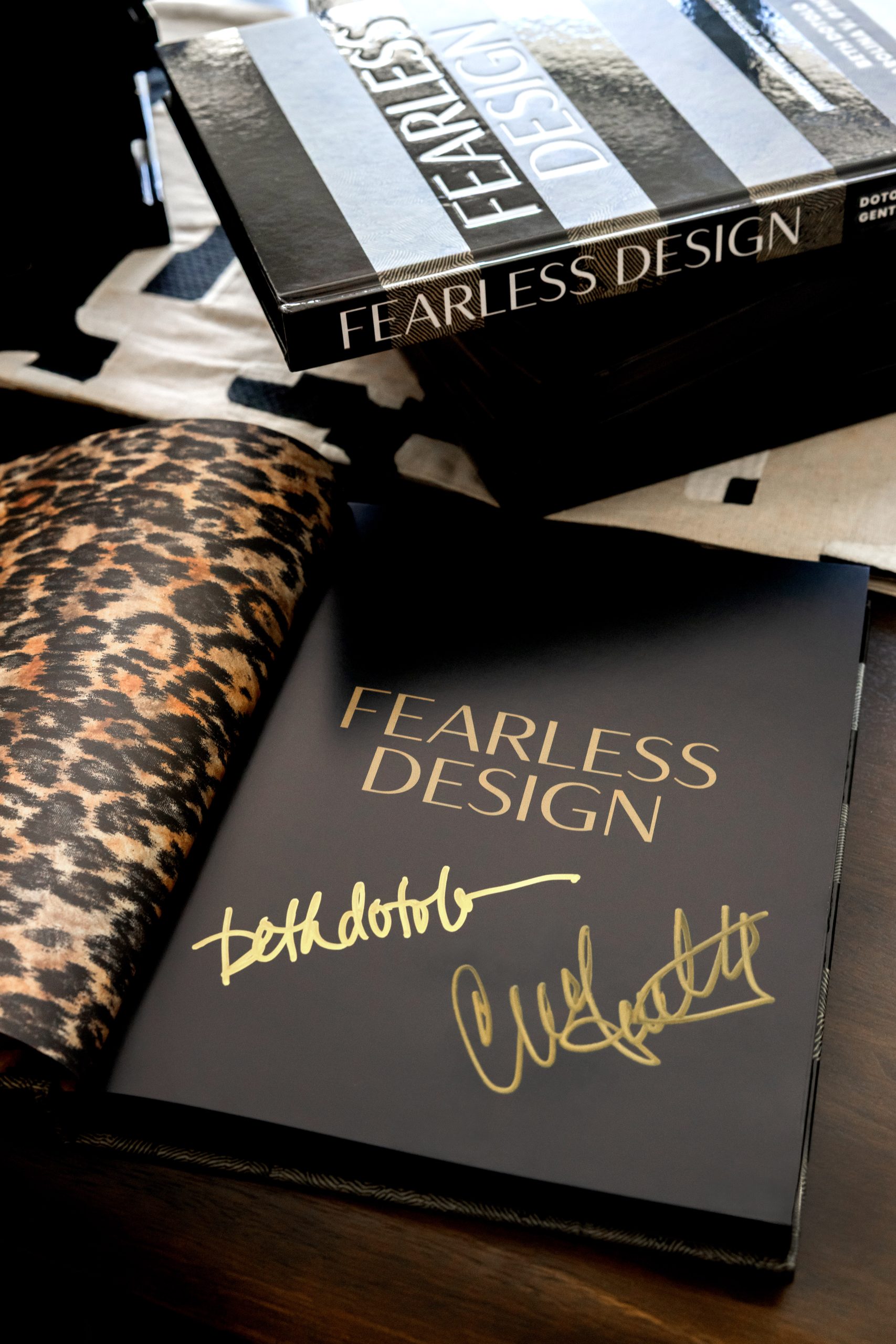
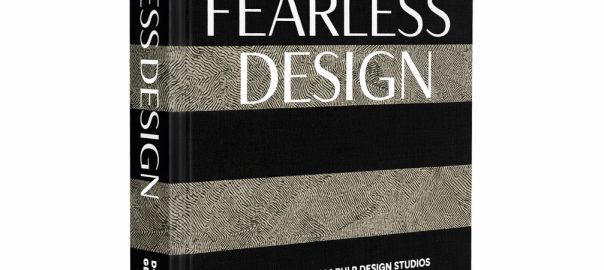
The book itself reflects our design philosophy. Wrapped in a bold, graphic cover with rich tones and layered pattern, it’s designed to feel like a design object, something meant to live out in the open and spark inspiration.

Step inside Pulp’s world – and embrace what it means to be FEARLESS! Click here to pre-order your copy now!